Safe boating in Florida
Stay Off the Grass
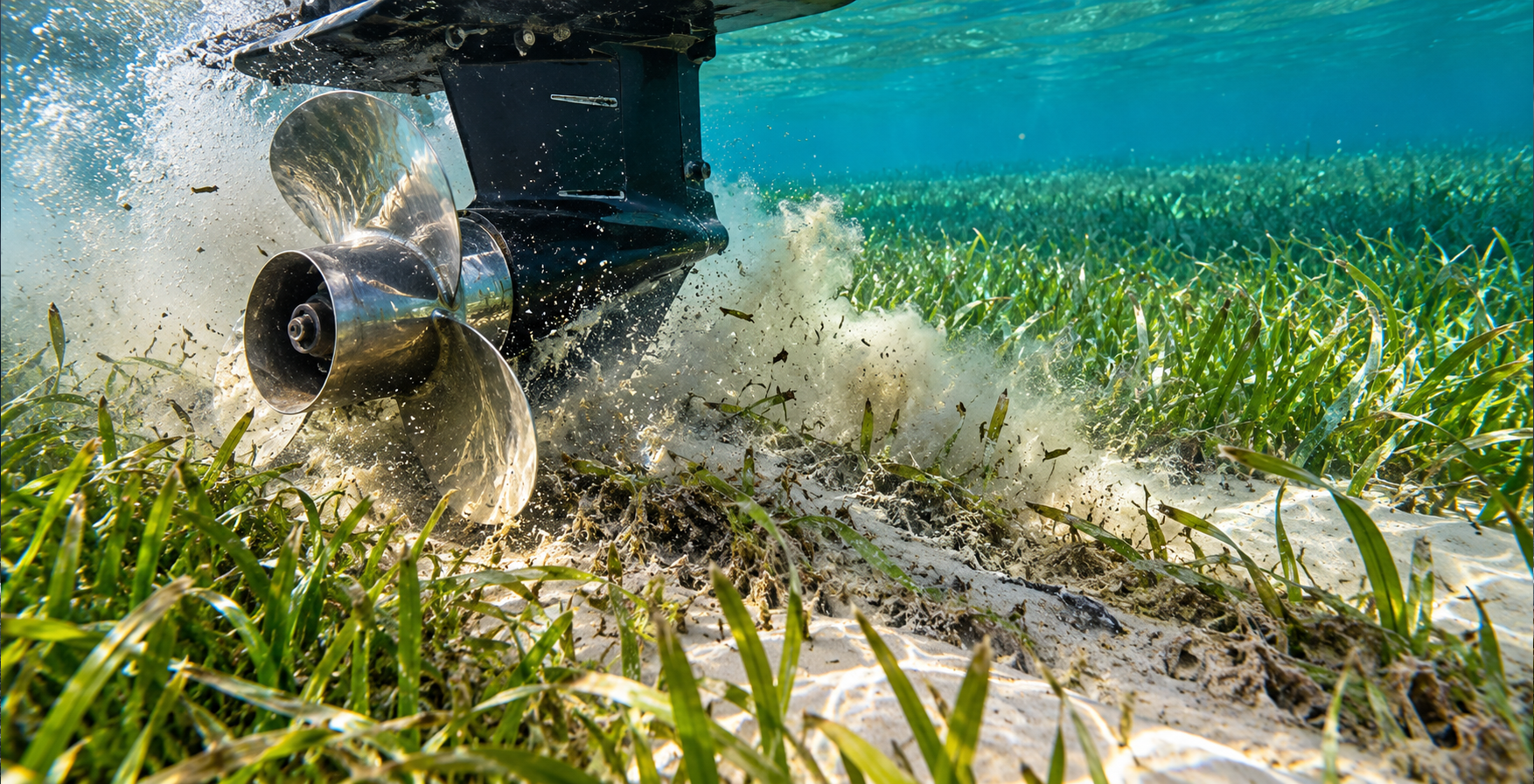
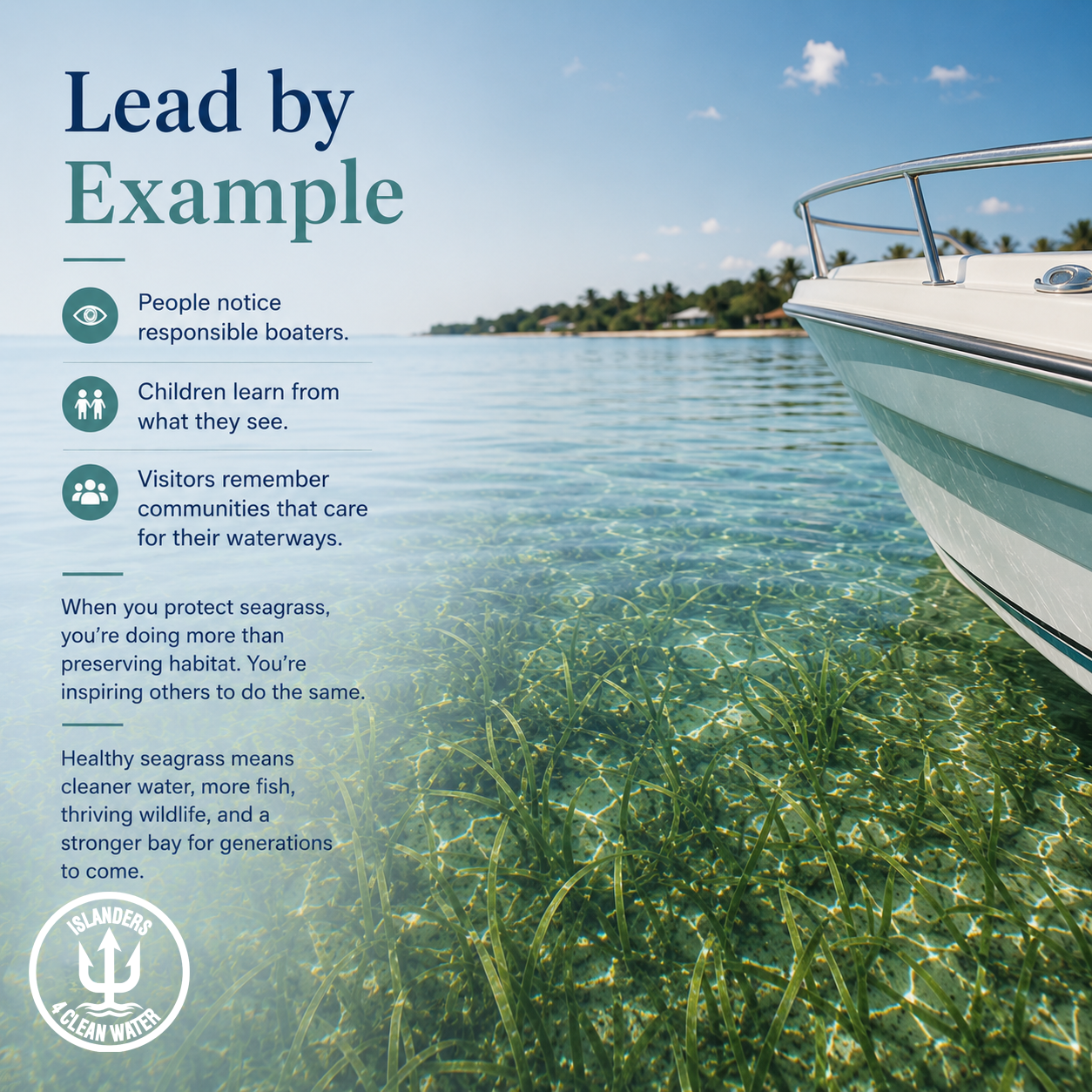
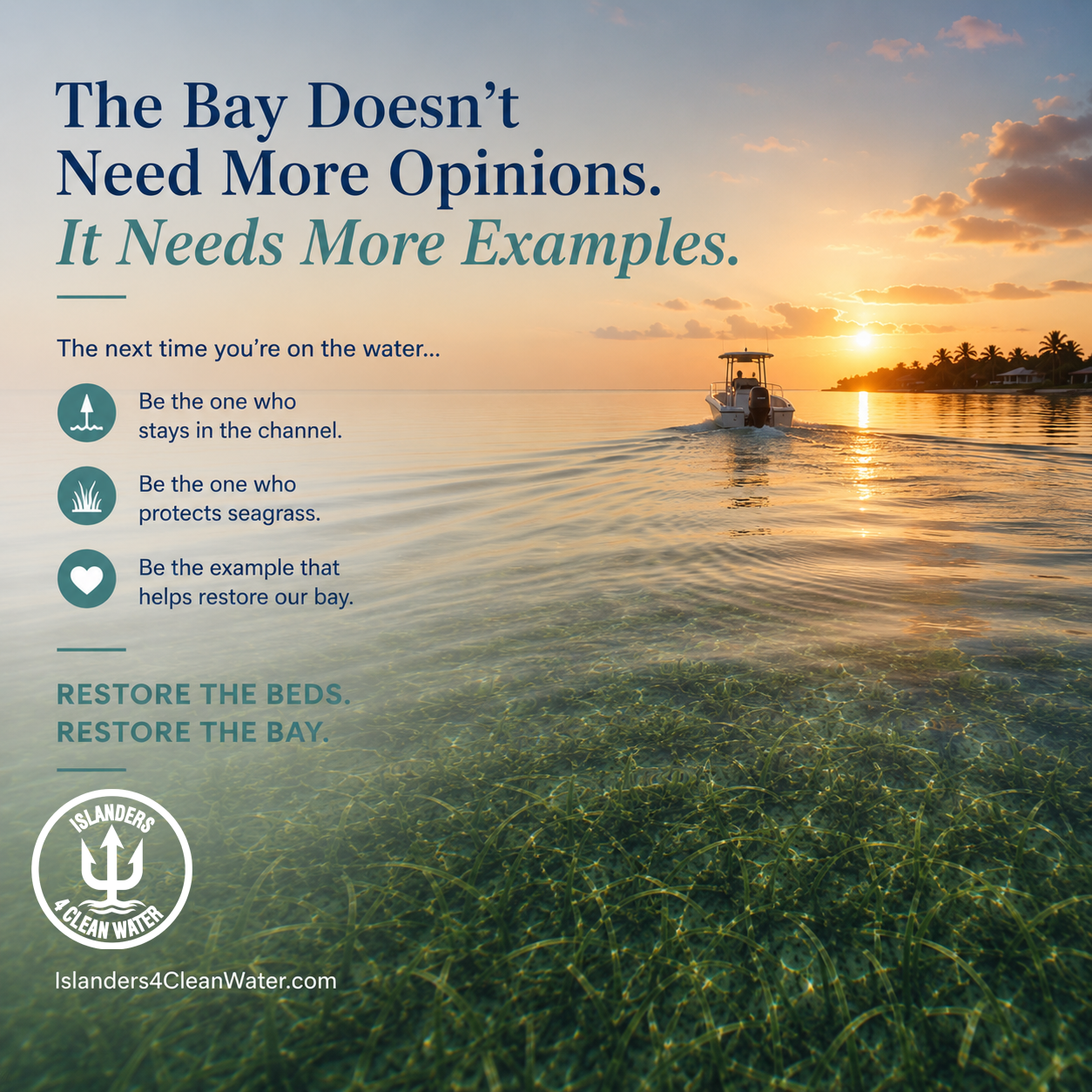
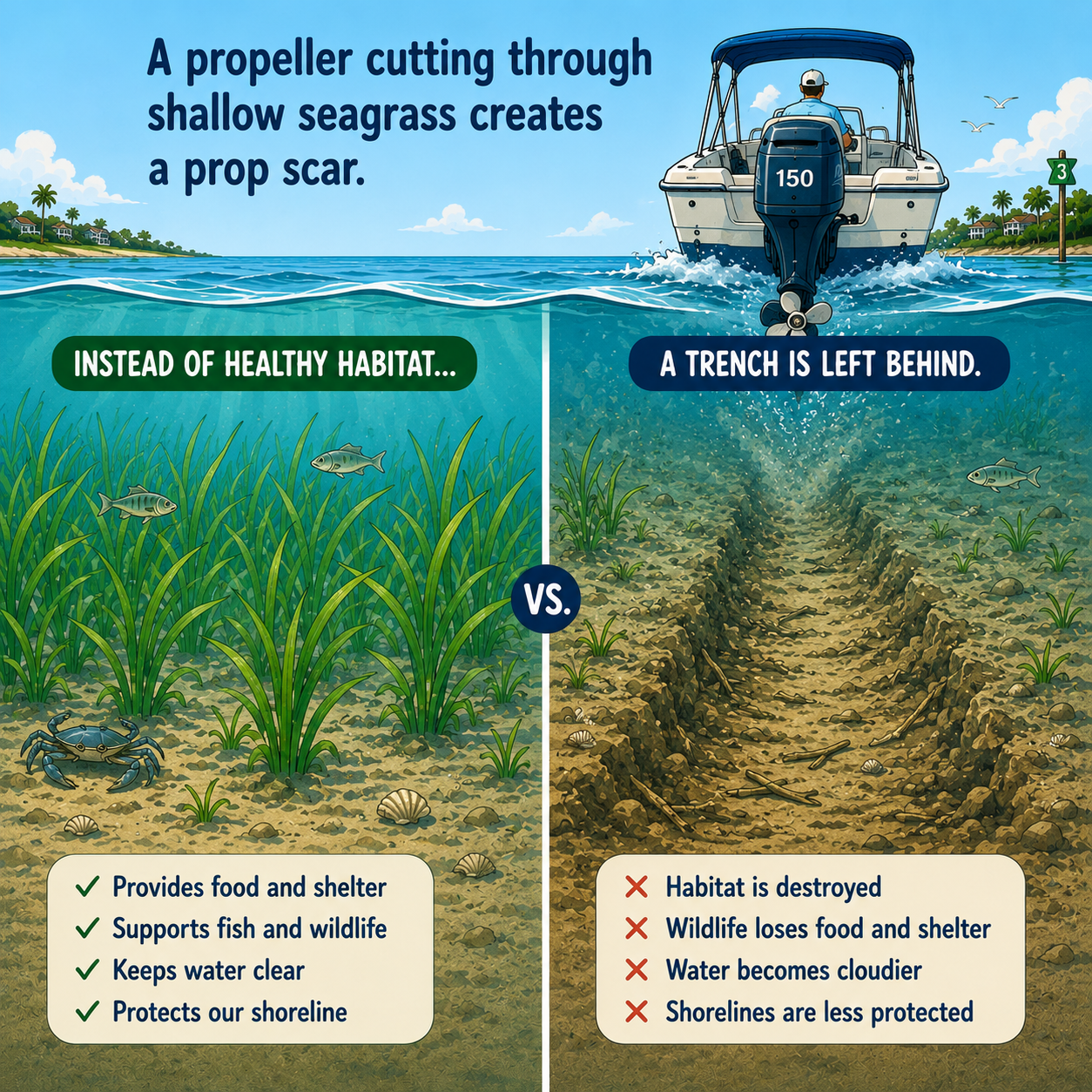
Florida's seagrass meadows are living ecosystems — and your boat's propeller can destroy in seconds what takes decades to recover.
Boat smart. Protect what's beneath.
Why it matters
Seagrass Is Not Just Scenery
Seagrass meadows are one of Florida's most productive ecosystems. They shelter juvenile fish, filter the water, stabilize the seafloor, and feed manatees and sea turtles. Tampa Bay alone has lost more than half its historic seagrass coverage — and propeller scarring is one of the leading causes.
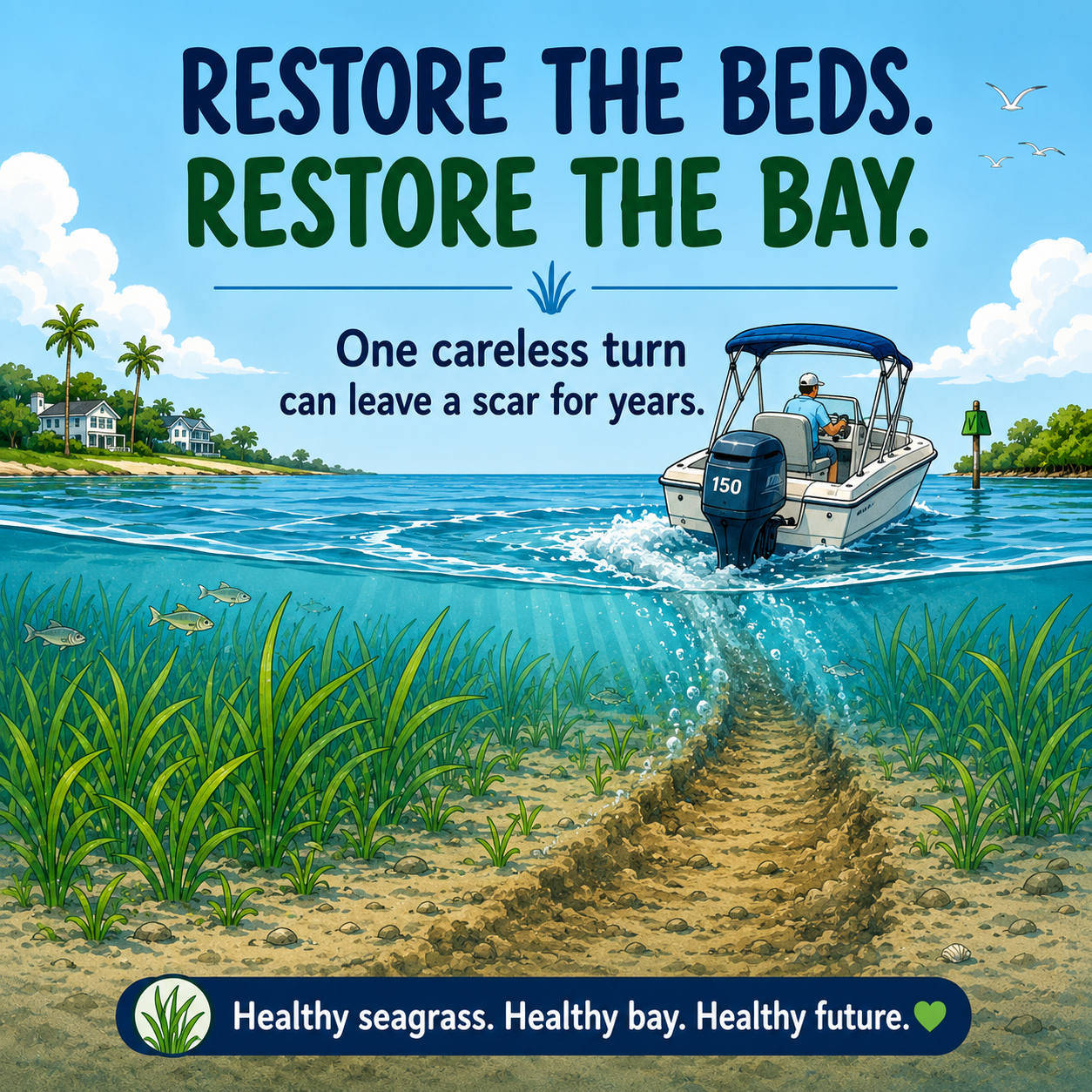
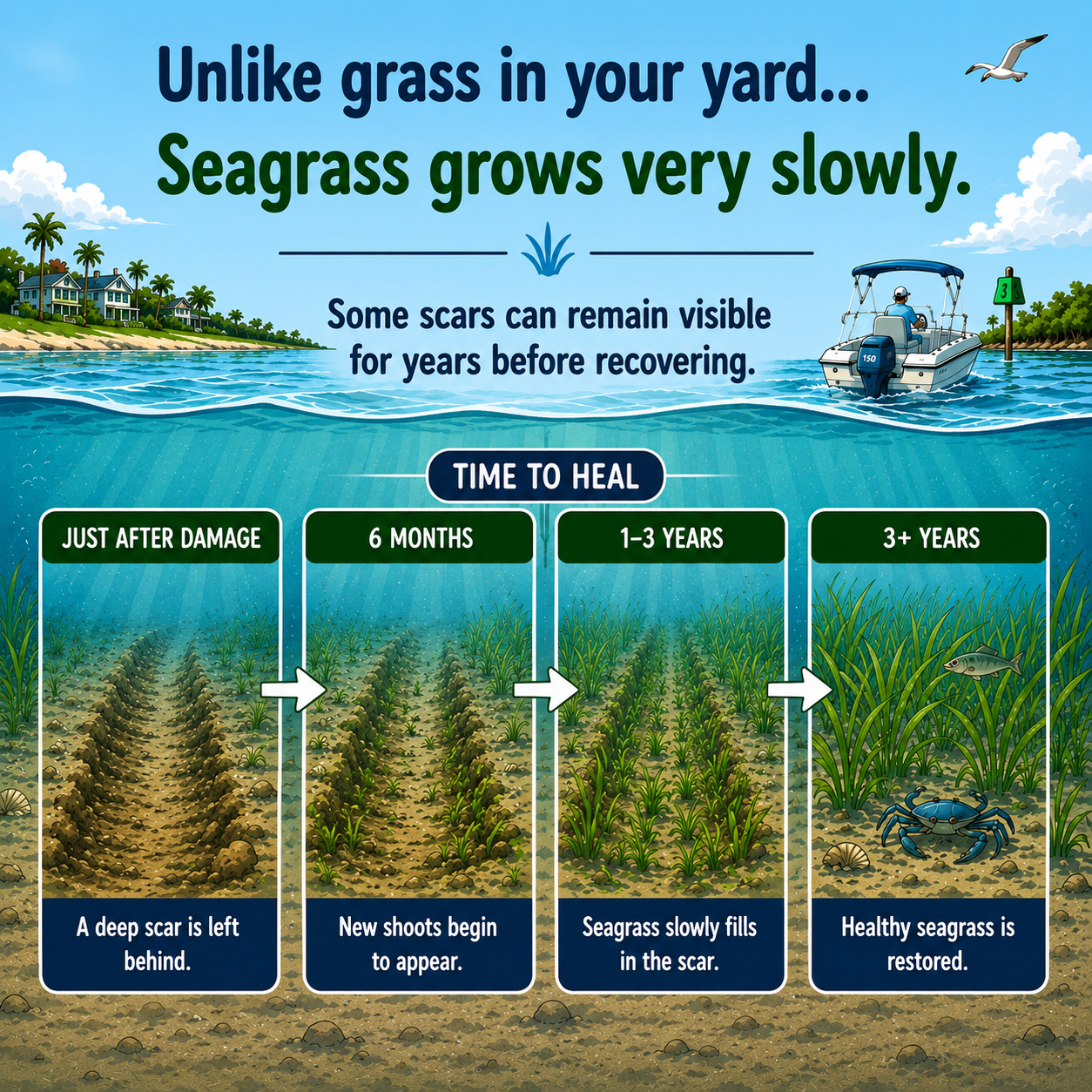
A single pass through a shallow flat can carve a scar that takes 10 to 25 years to heal — if it heals at all. Repeated scarring creates permanent bare channels that fragment habitat and accelerate erosion.
"One turn of a prop can undo a decade of restoration."
Local seagrass habitat
Seagrass Beds Around Anna Maria Island
The blue areas on this map show documented seagrass habitat in the waters surrounding Anna Maria Island — one of the most ecologically important stretches of the Florida Gulf Coast.
These beds are fragile and slow to recover. Explore the full interactive map to see exactly where seagrass grows near you.
Explore the Interactive Map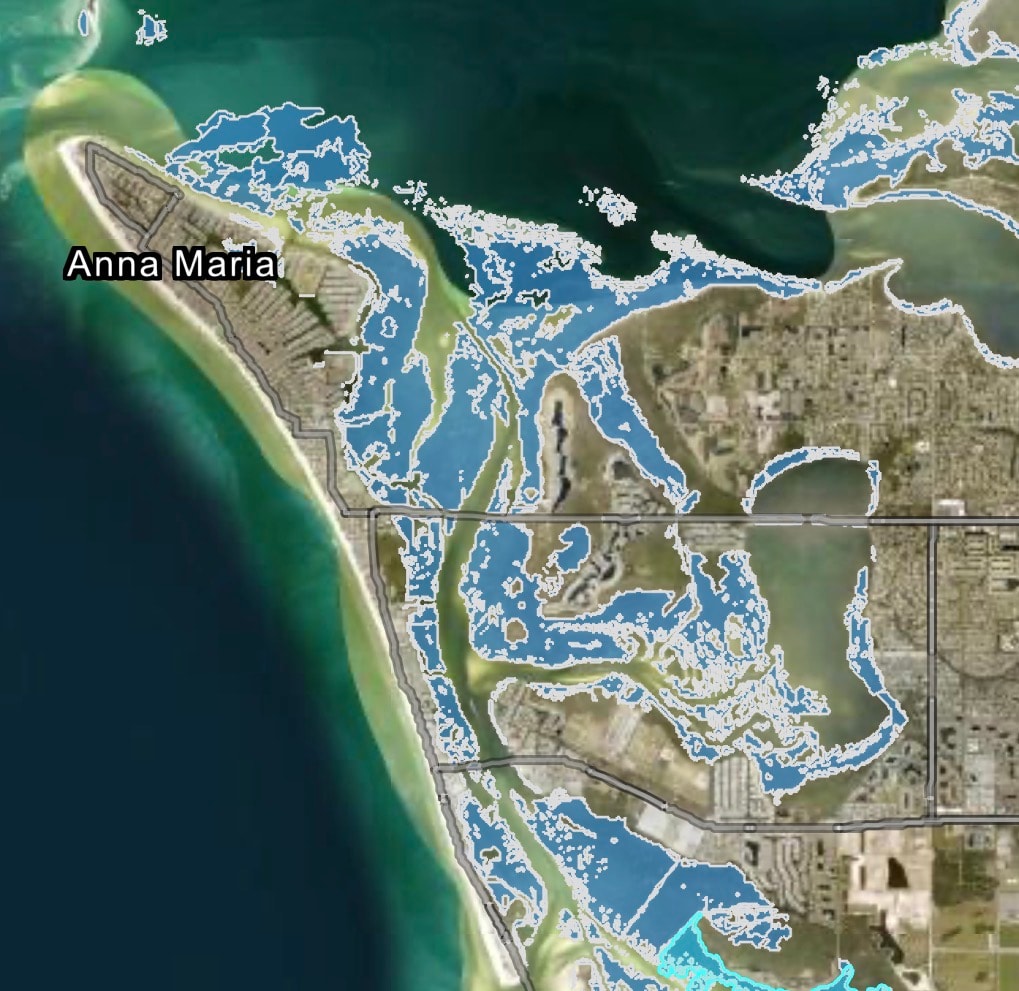
Read the water
How to Tell When It's Too Shallow
The clearest water can be the most deceptive. Use these signals to stay safe and keep the grass intact.
Watch the color
Dark green or brown patches beneath the surface are seagrass beds. Light tan or white patches are bare sand — but the grass nearby is still at risk from prop wash.
Check your depth
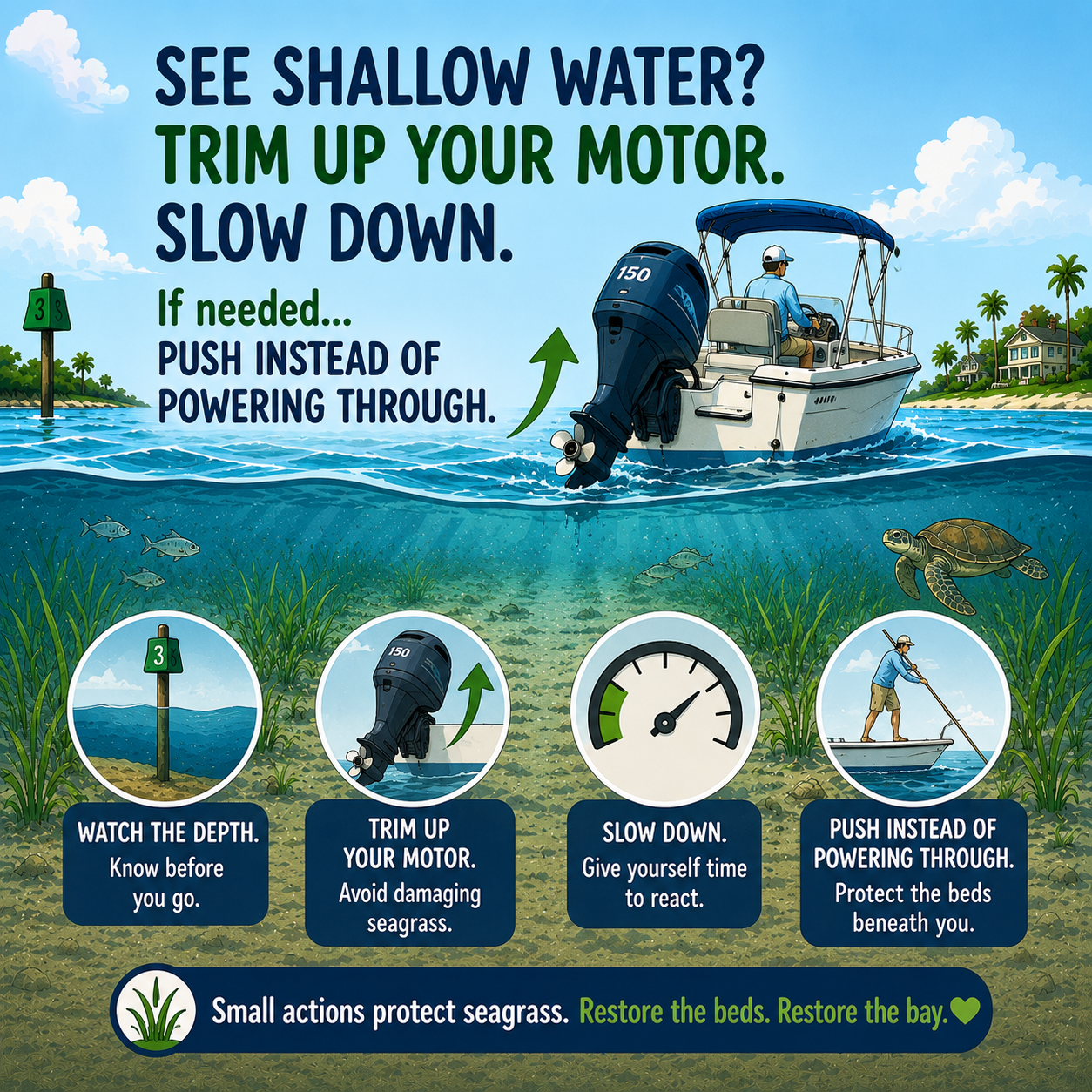
If your depth finder reads less than 3 feet, slow down and prepare to pole or push off. Outboard motors need at least 18–24 inches of clearance below the skeg to avoid contact.
Use nautical charts
NOAA charts and apps like Navionics show shallow flats, grass beds, and marked channels. Plan your route before you leave the dock — not while you're already in the shallows.
Stay in marked channels
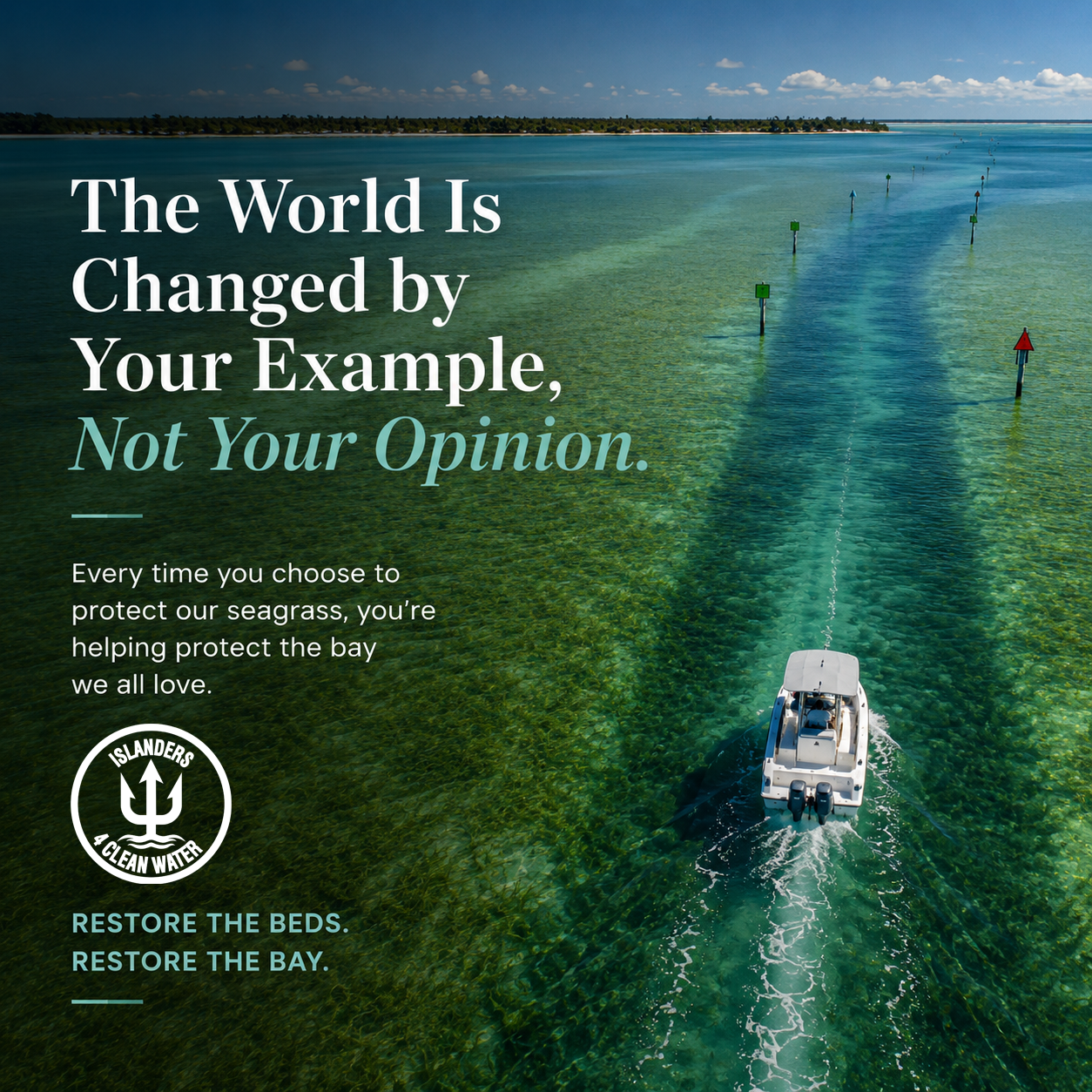
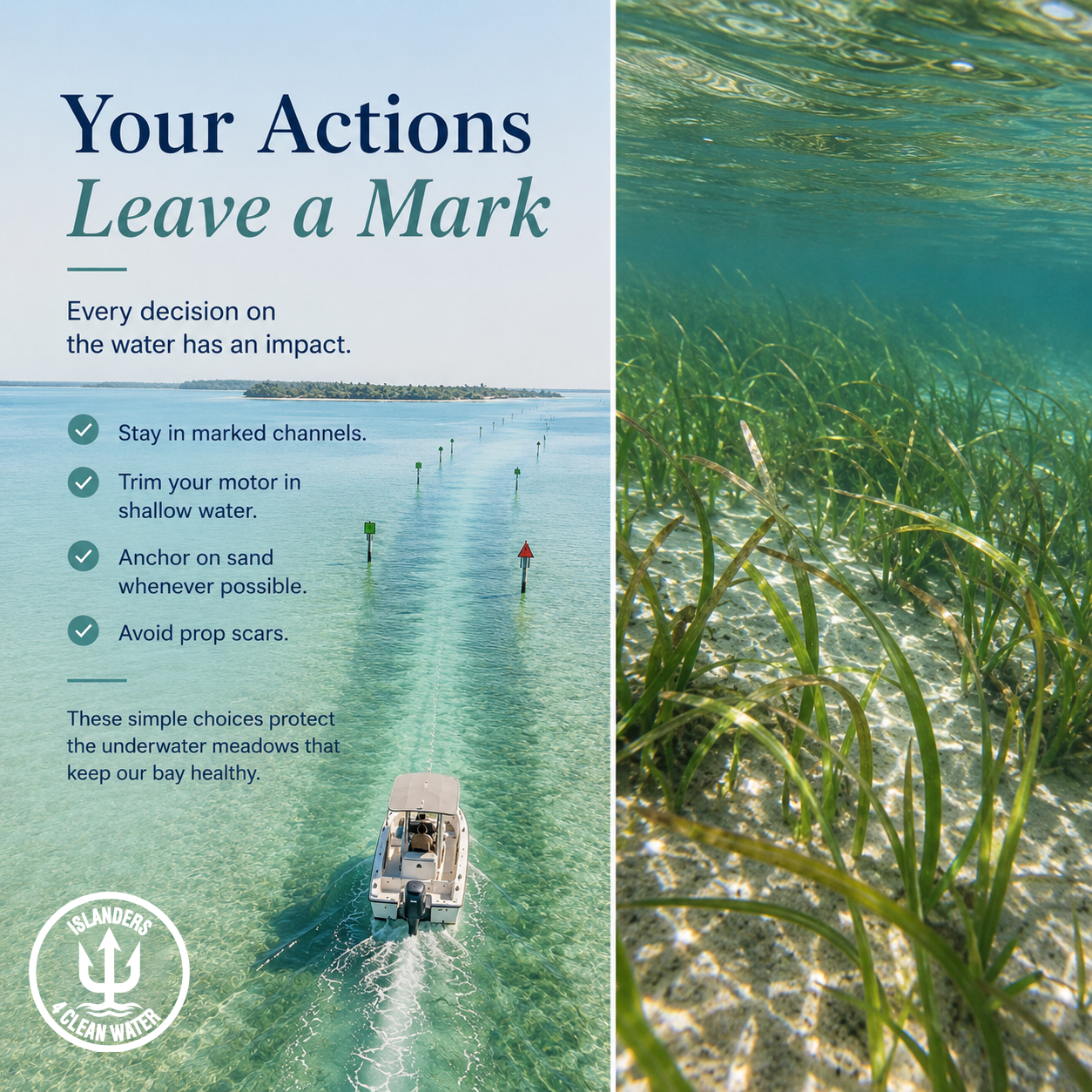
Channel markers exist for a reason. Cutting corners to save time is the most common cause of prop scarring. If there's no channel, idle speed and a raised motor are your best tools.
Boater's guide
Five Rules Every Florida Boater Should Know
Idle through the shallows
Reduce speed to idle before entering water less than 3 feet deep. A slow-moving prop causes far less damage — and gives you time to react.
Trim up your motor
Tilt your outboard or sterndrive up as you enter shallow water. This raises the prop and reduces the risk of contact with the bottom.
Pole or push in the flats
In very shallow water, shut the motor off entirely and use a push pole. It's quieter, better for fishing, and leaves zero impact on the grass.
Anchor away from grass beds
When anchoring, choose sand or mud bottoms. Dragging an anchor across seagrass tears up root systems and creates scars just like a propeller.
Report illegal scarring
If you witness a vessel repeatedly scarring seagrass, you can report it to the Florida Fish and Wildlife Conservation Commission (FWC) at 888-404-3922.
The long road back
Scars Don't Heal Overnight
Seagrass grows slowly — as little as a few centimeters per year. A prop scar that looks like a minor scratch can take a decade or more to revegetate, and wide or repeated scars may never fully recover.
During that recovery window, the bare channel acts as a sediment trap, clouds the surrounding water, and cuts off the habitat connections that fish and wildlife depend on.
10–25
Years to recover
50%+
Of historic Tampa Bay seagrass lost
1,000+
Species depend on seagrass habitat
Protect the Meadows Beneath the Water
Learn more about what's at stake — and what you can do to help Florida's seagrass recover.