August
IMAGINE MEADOWS BENEATH THE WATER
"One of Florida's most important ecosystems is hiding just beneath the surface."
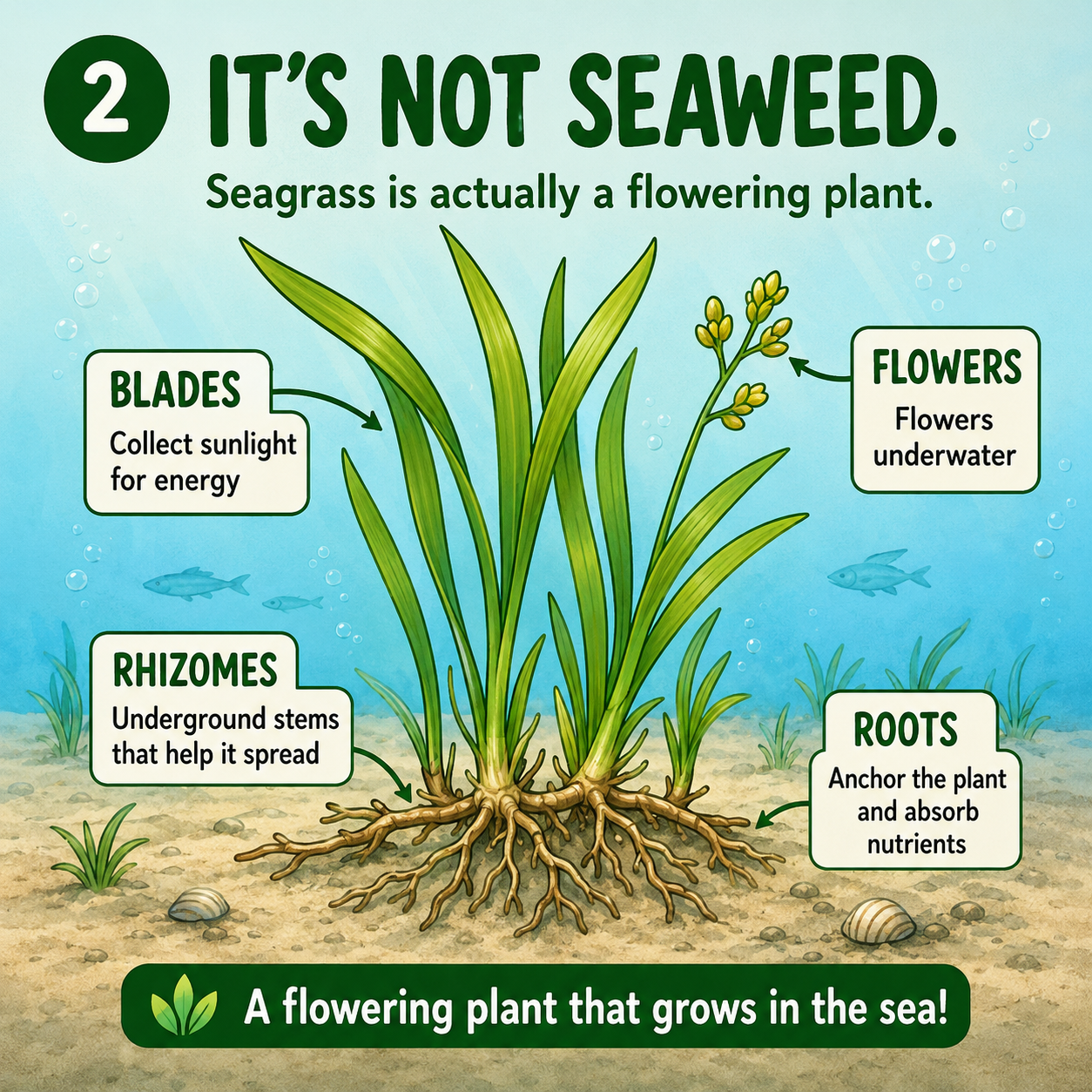
Seagrass is not seaweed. It is a flowering plant that grows underwater and creates habitat for marine life while helping support cleaner water and healthier coastal ecosystems.
"What looks like grass beneath the water is an entire living community."
Seagrass Habitat
AN UNDERWATER MEADOW
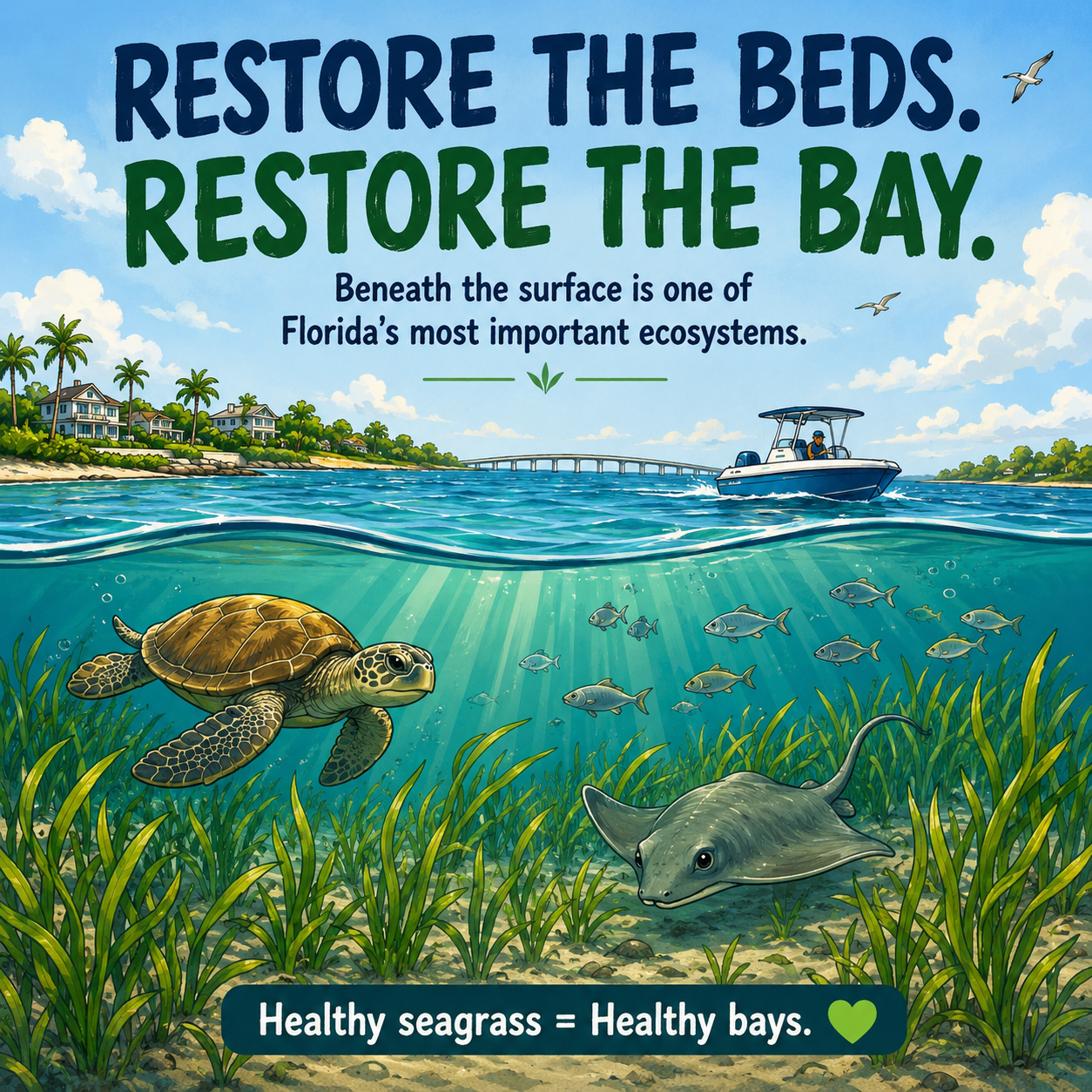
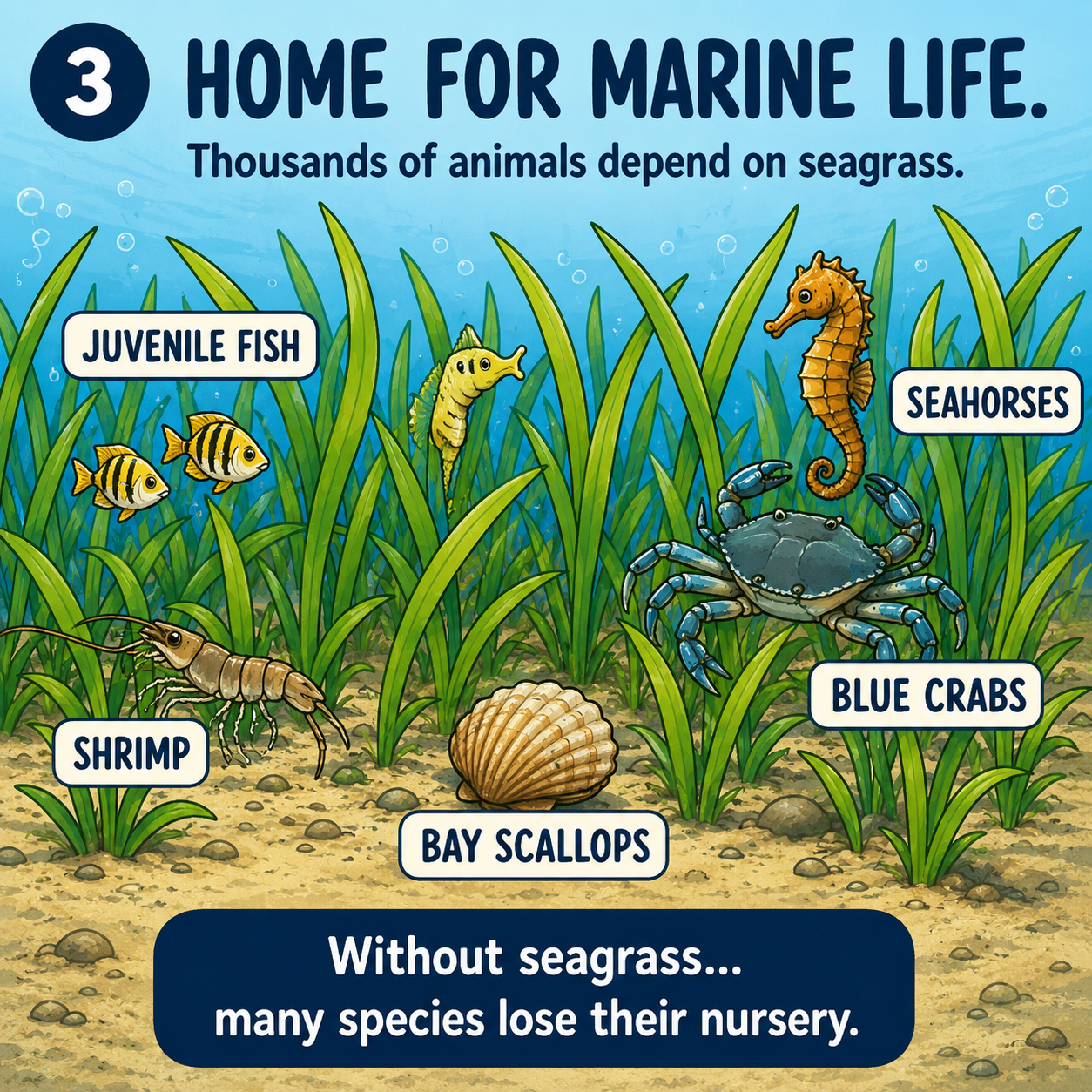
Seagrass beds provide food and shelter for fish, crabs, shrimp, scallops, sea turtles, manatees, and many other species.
These underwater meadows are especially important as nursery habitat for young marine life.
"Healthy seagrass means more life beneath the surface."
What Seagrass Does
LET NATURE DO THE WORK
Seagrass quietly performs several important jobs.
- It provides habitat for marine life.
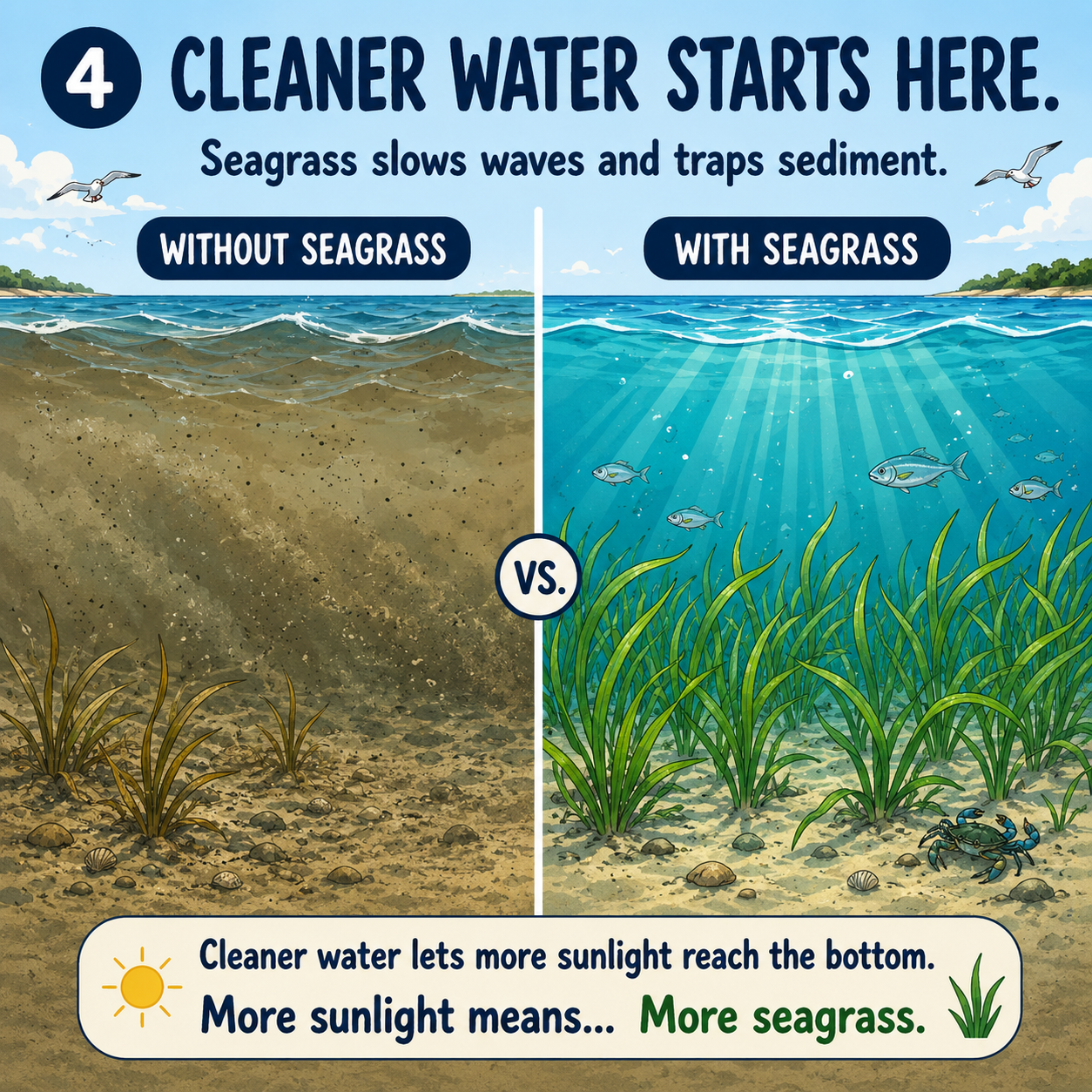
- It traps suspended sediment and can help improve water clarity.
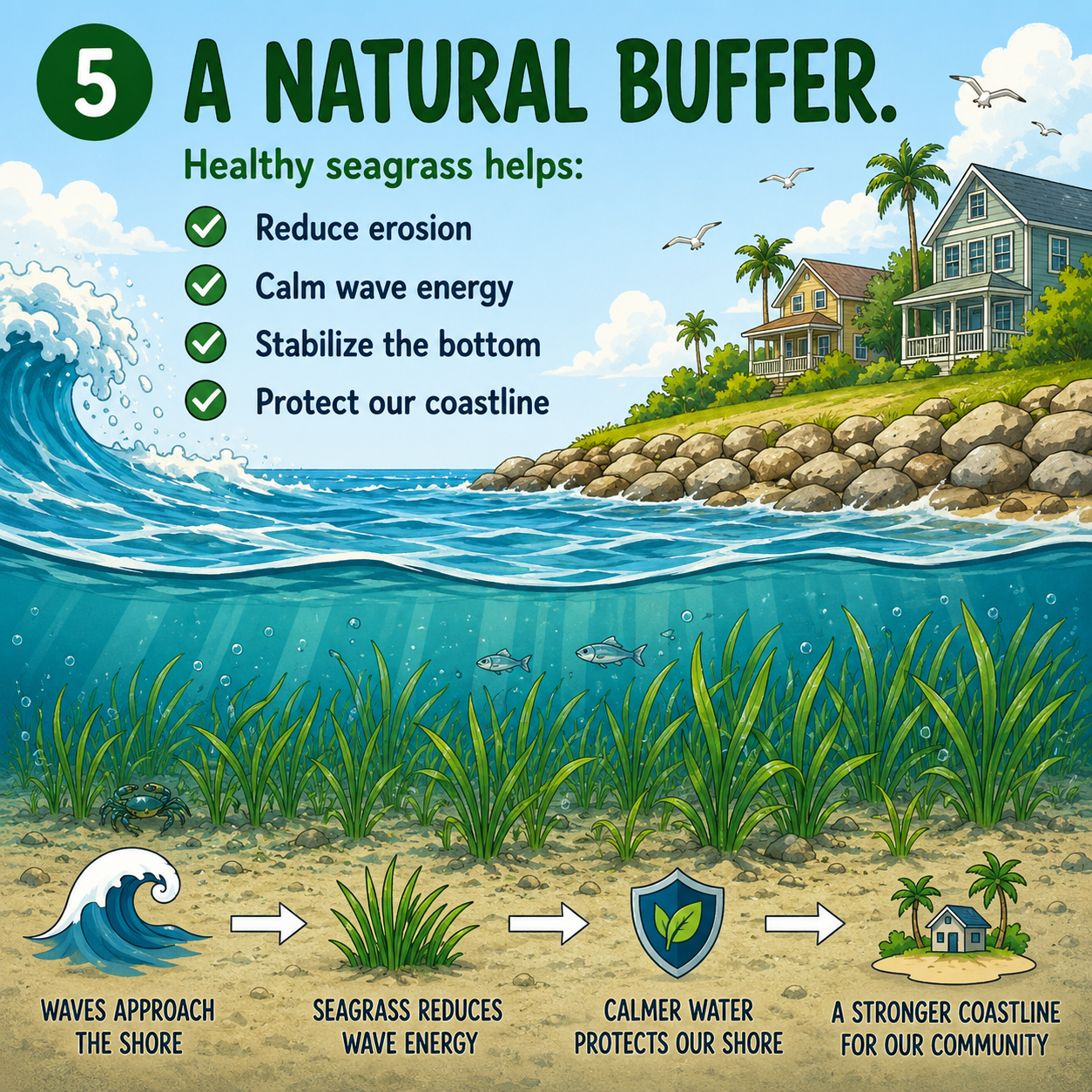
- Its roots and underground stems help stabilize the bottom.
- It helps reduce wave energy and shoreline erosion.
- It stores carbon in the seabed.
"Seagrass protects the bay while the bay protects us."
Responsible Boating
ONE TURN CAN LEAVE A SCAR
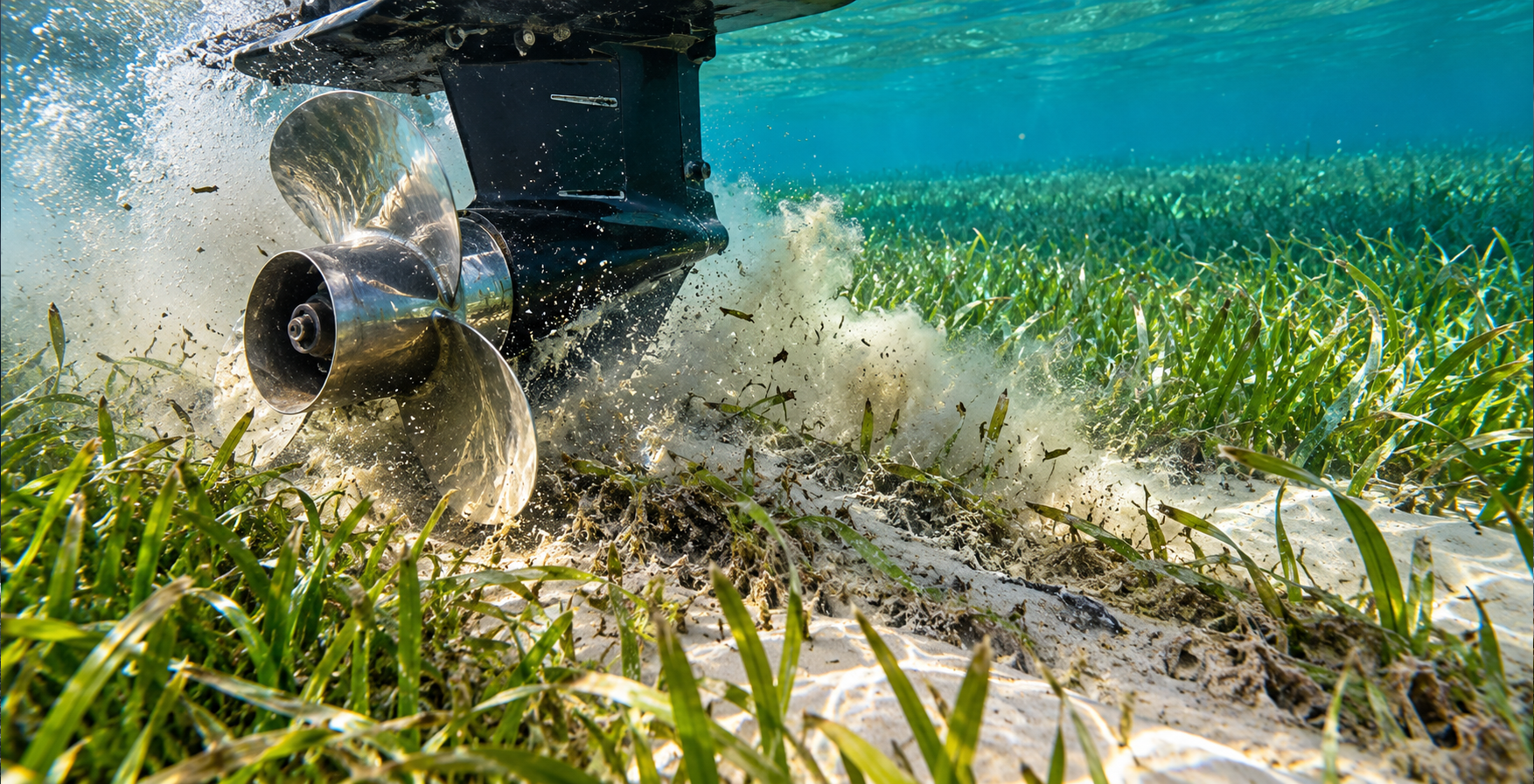
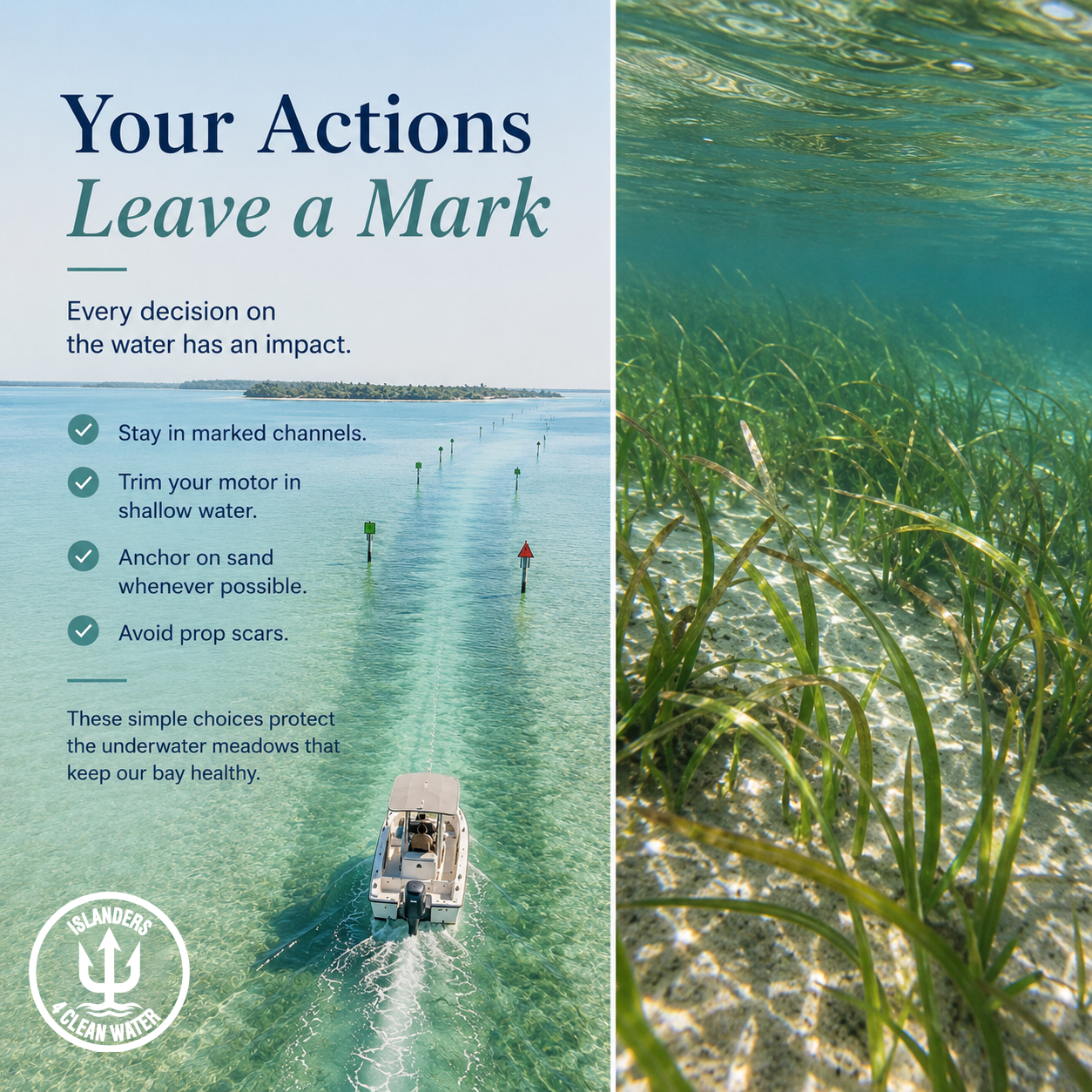
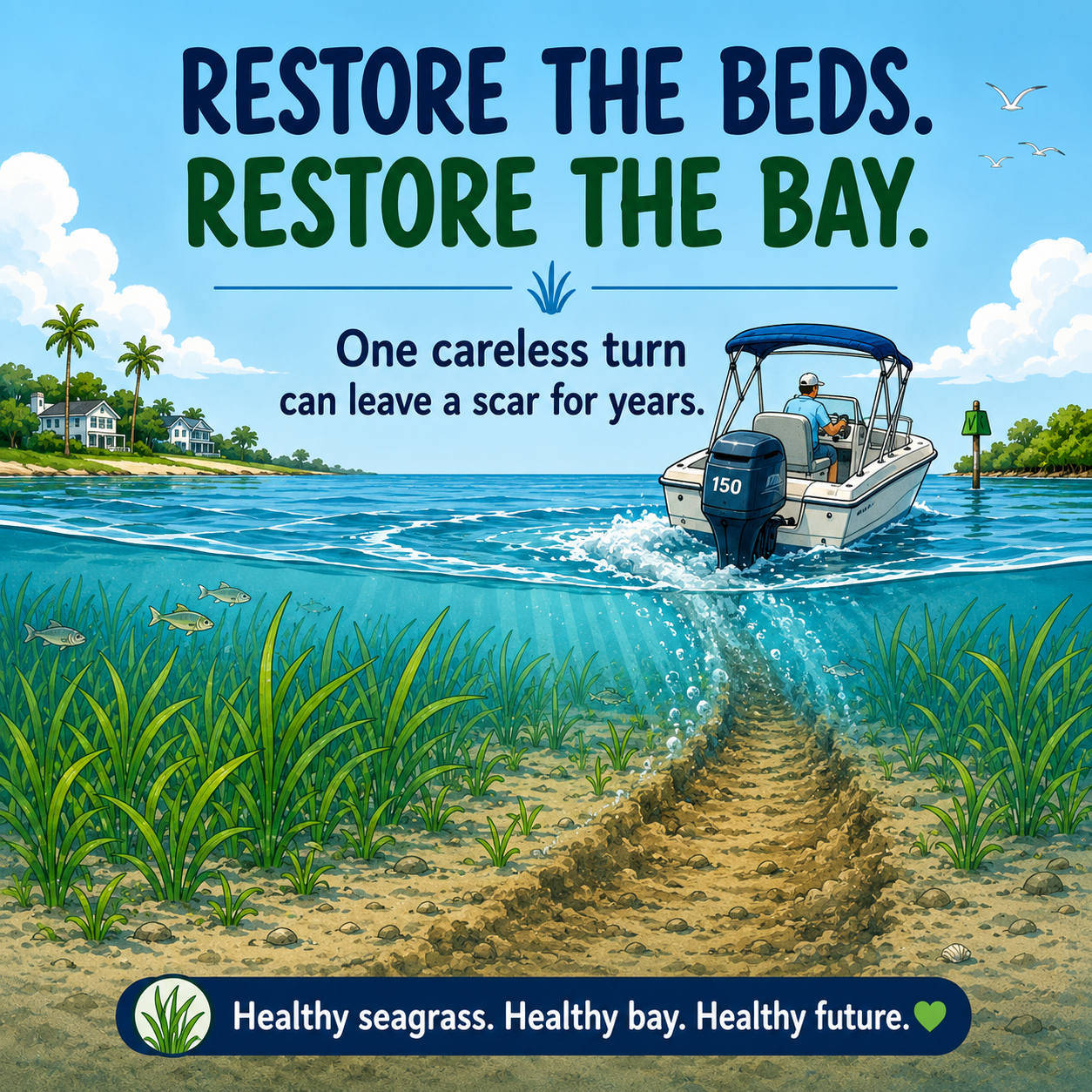
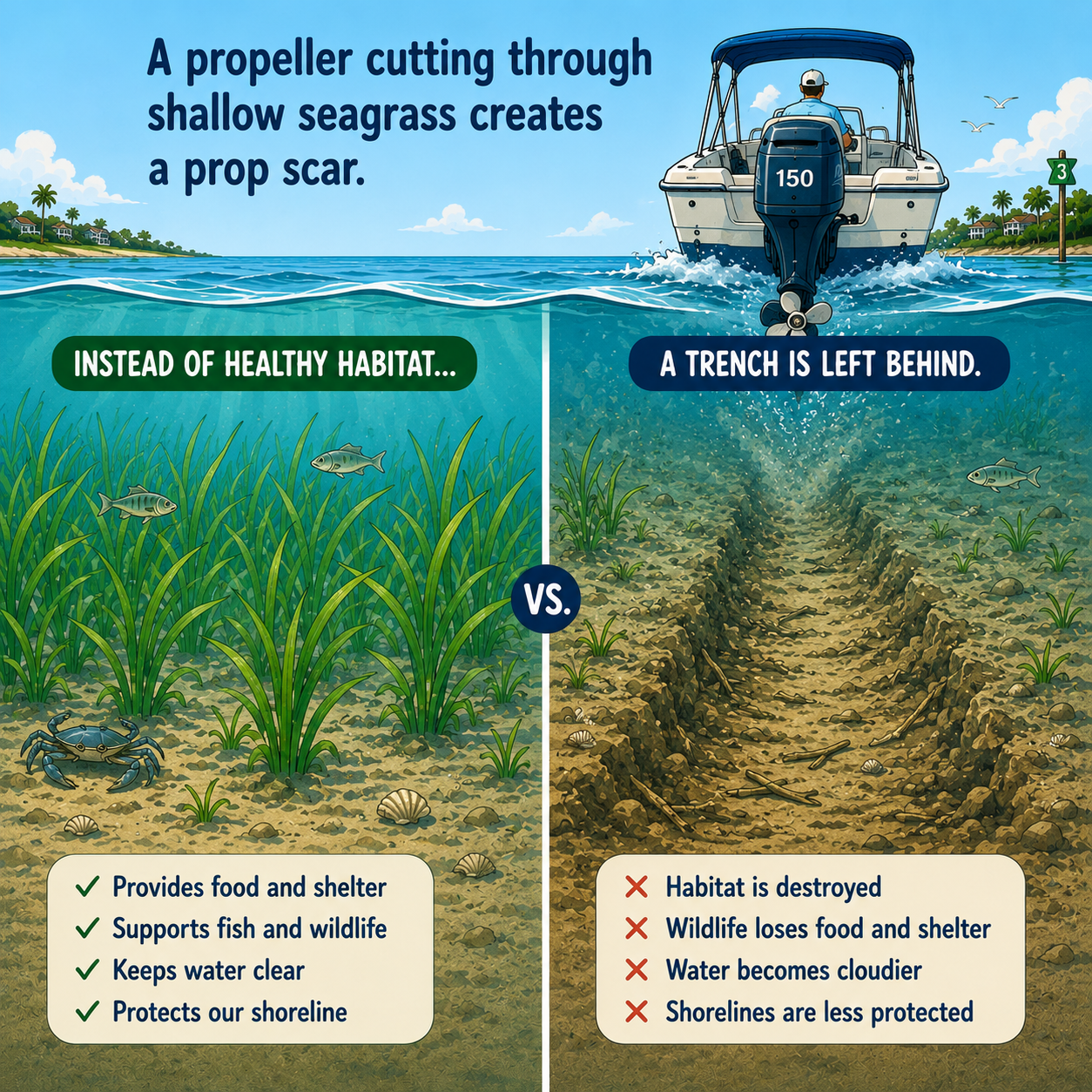
A boat propeller cutting through a shallow seagrass bed can leave a trench known as a prop scar.
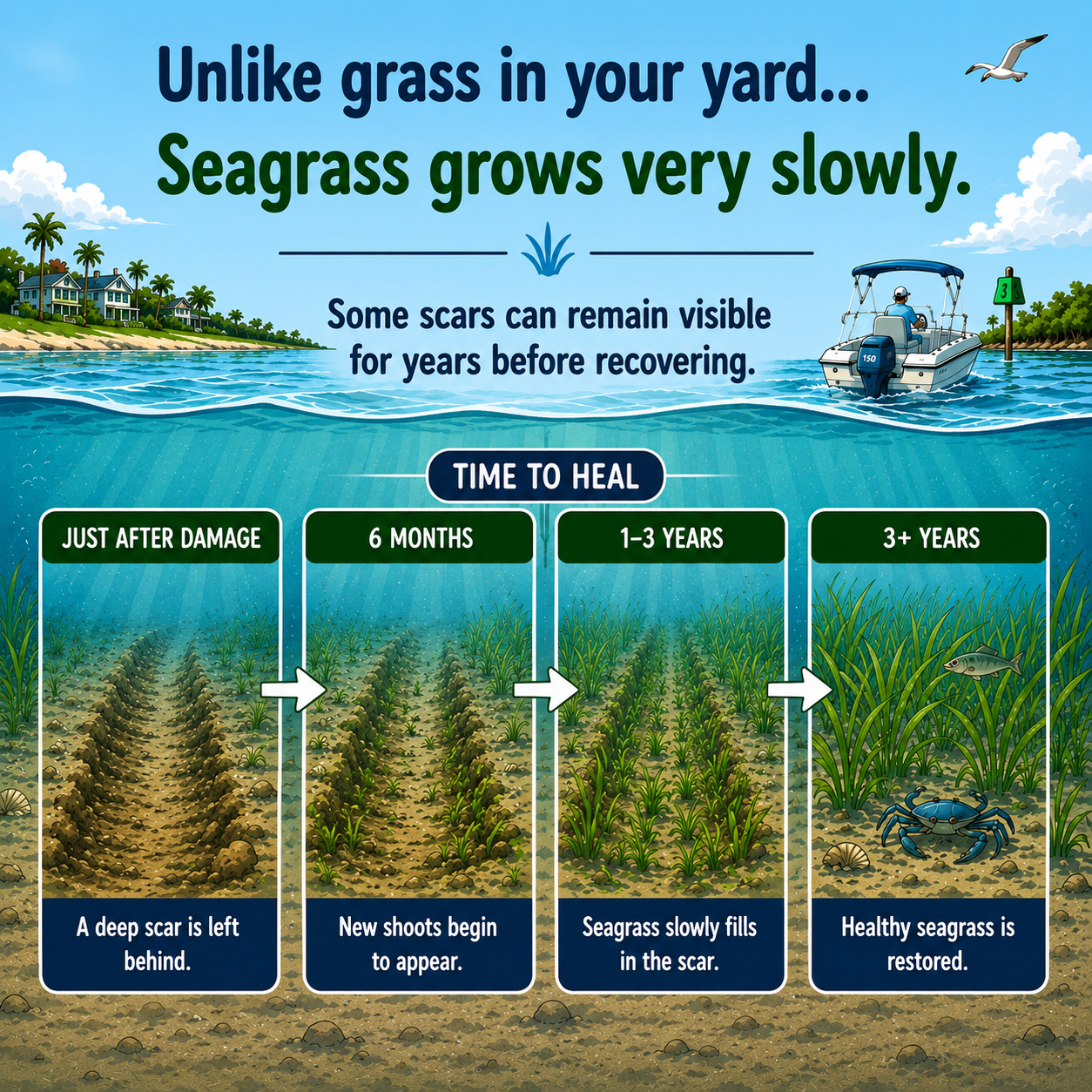
These scars can damage roots and underground plant structures, and recovery can take years.
"A few seconds of contact can leave a mark for years."
On the Water
BOAT LIKE THE MEADOW IS THERE
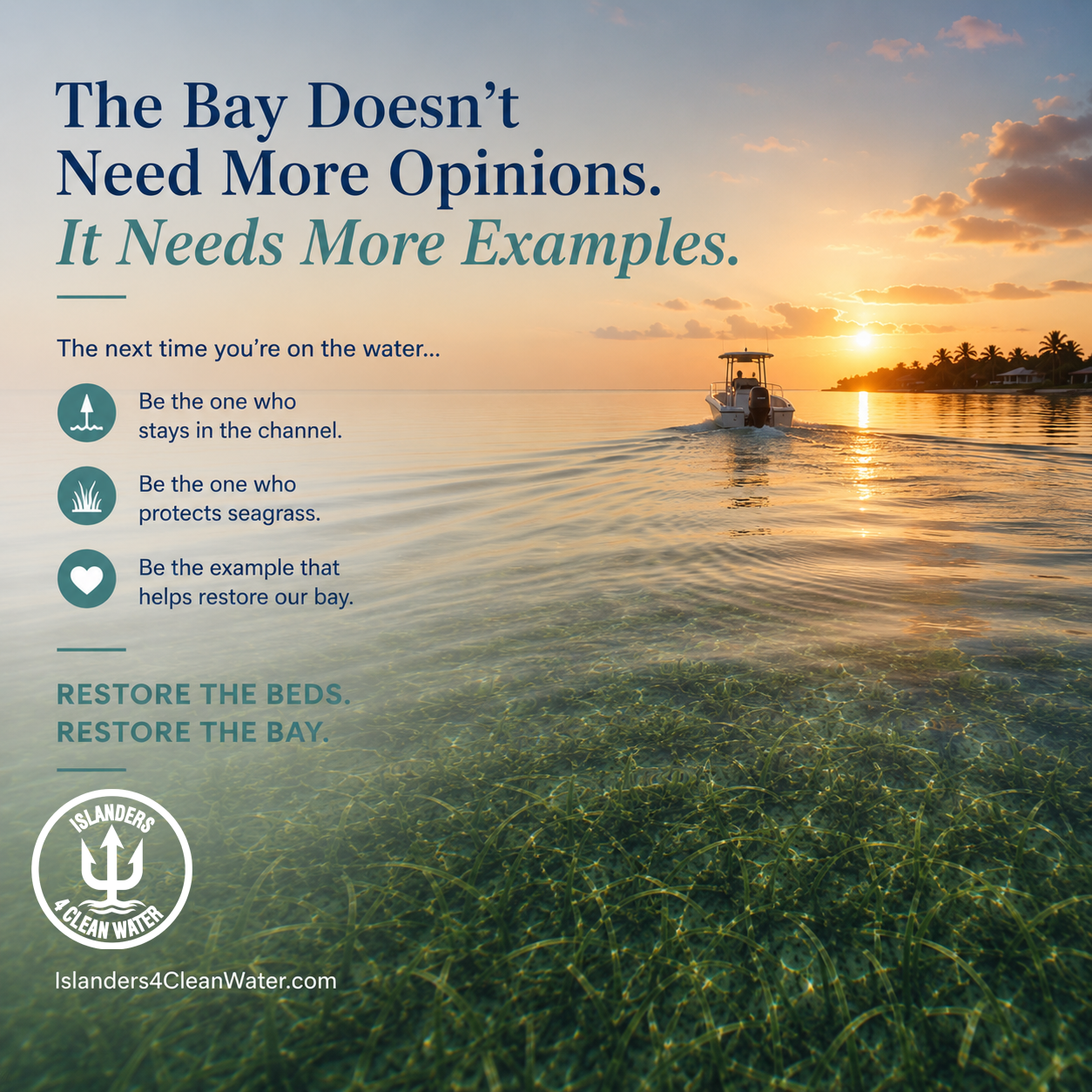
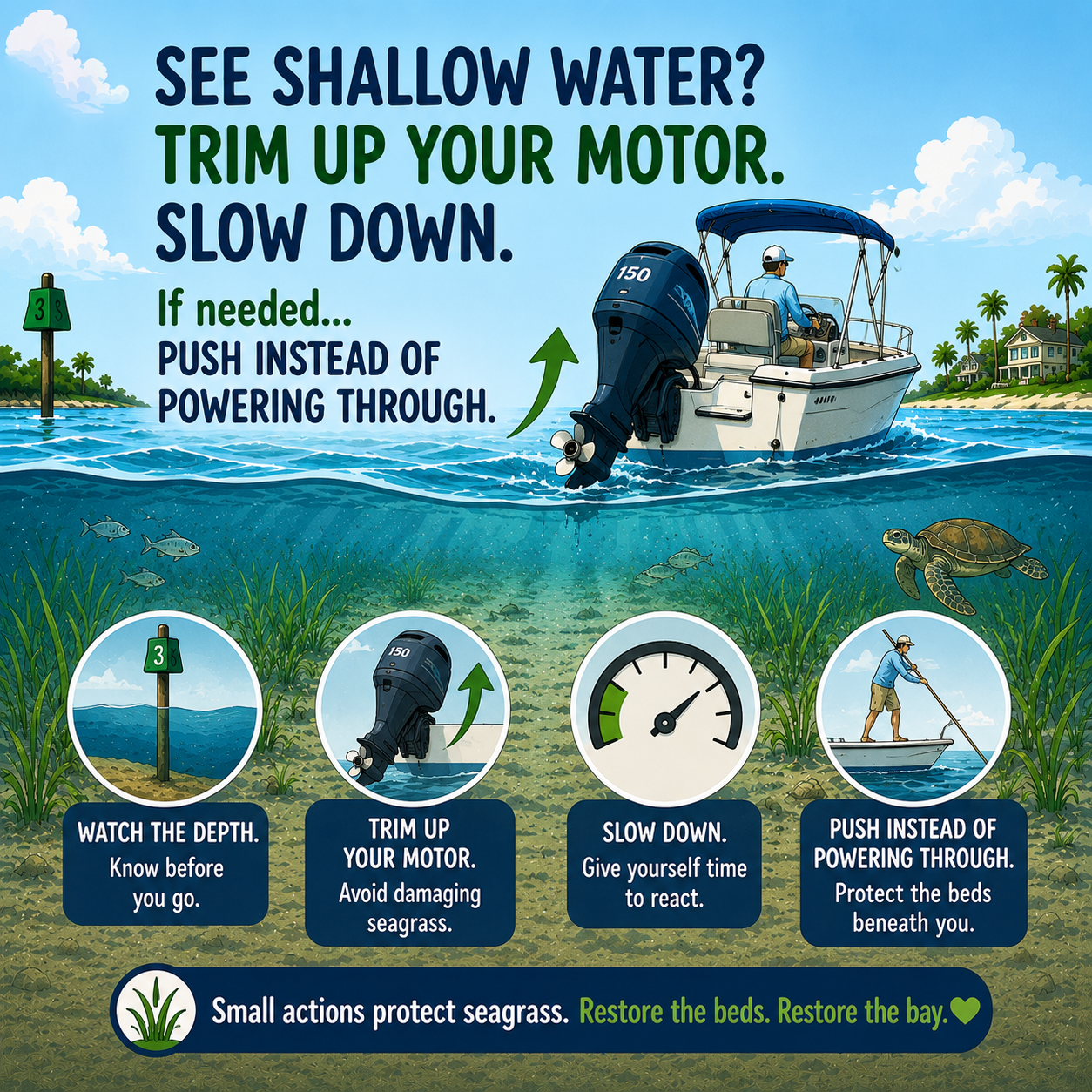
Responsible boating is one of the simplest ways to help protect seagrass.
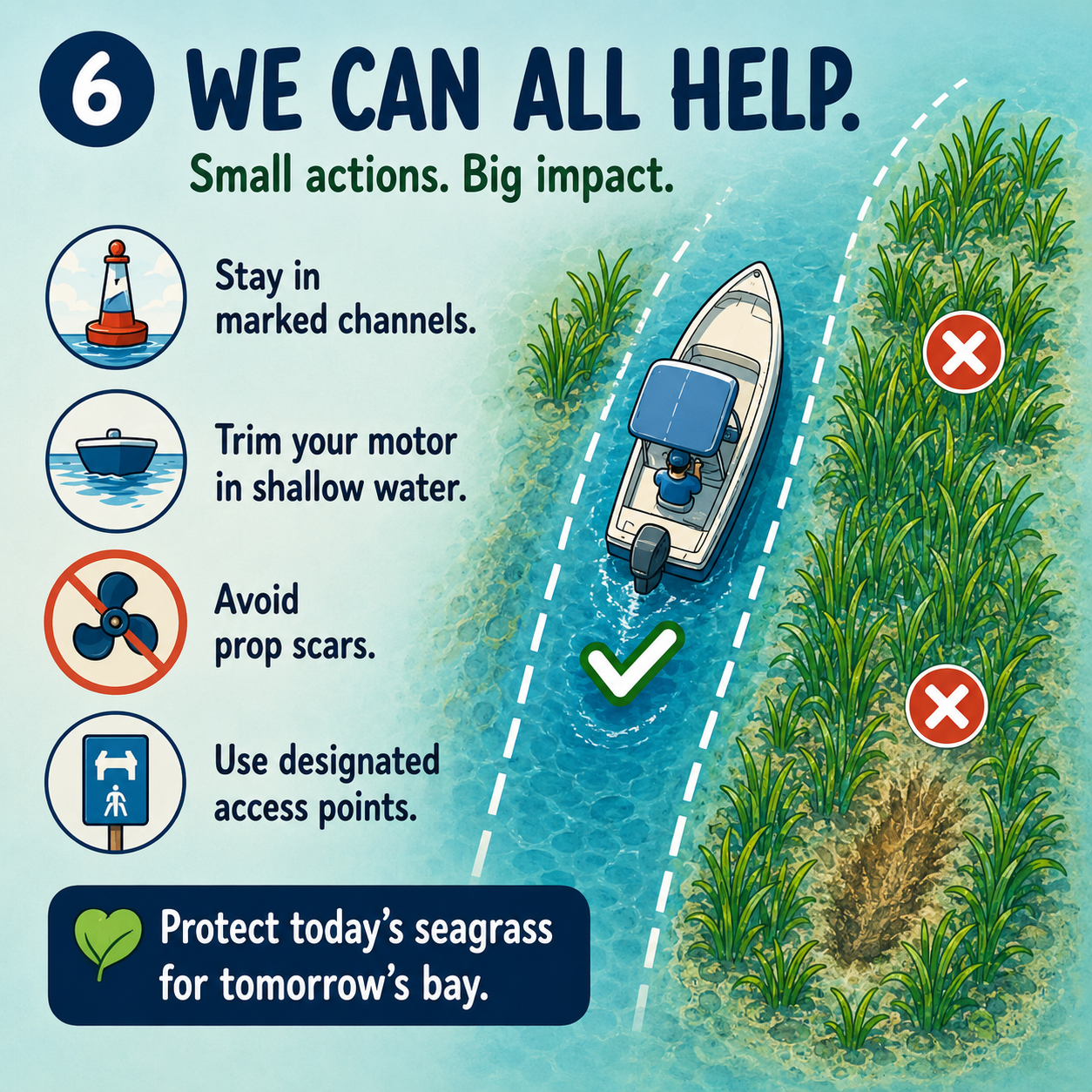
- Stay in marked navigation channels whenever possible.
- Watch your depth in shallow water.
- Slow down before entering shallow areas.
- Trim up your motor when needed.
- Anchor on sand instead of seagrass.
- If you run aground, stop rather than powering through the grass.
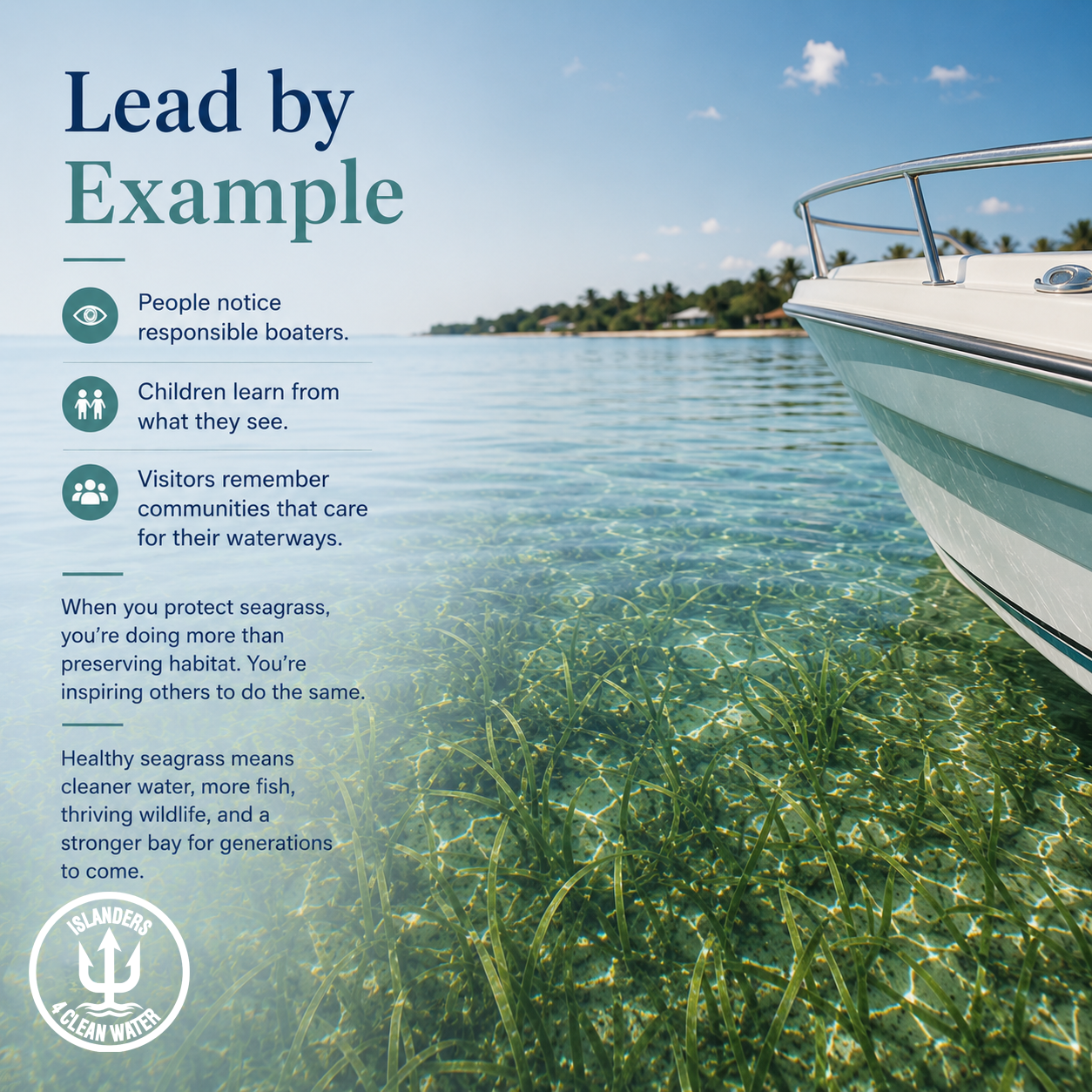
"Lead by example on the water."
Restoration
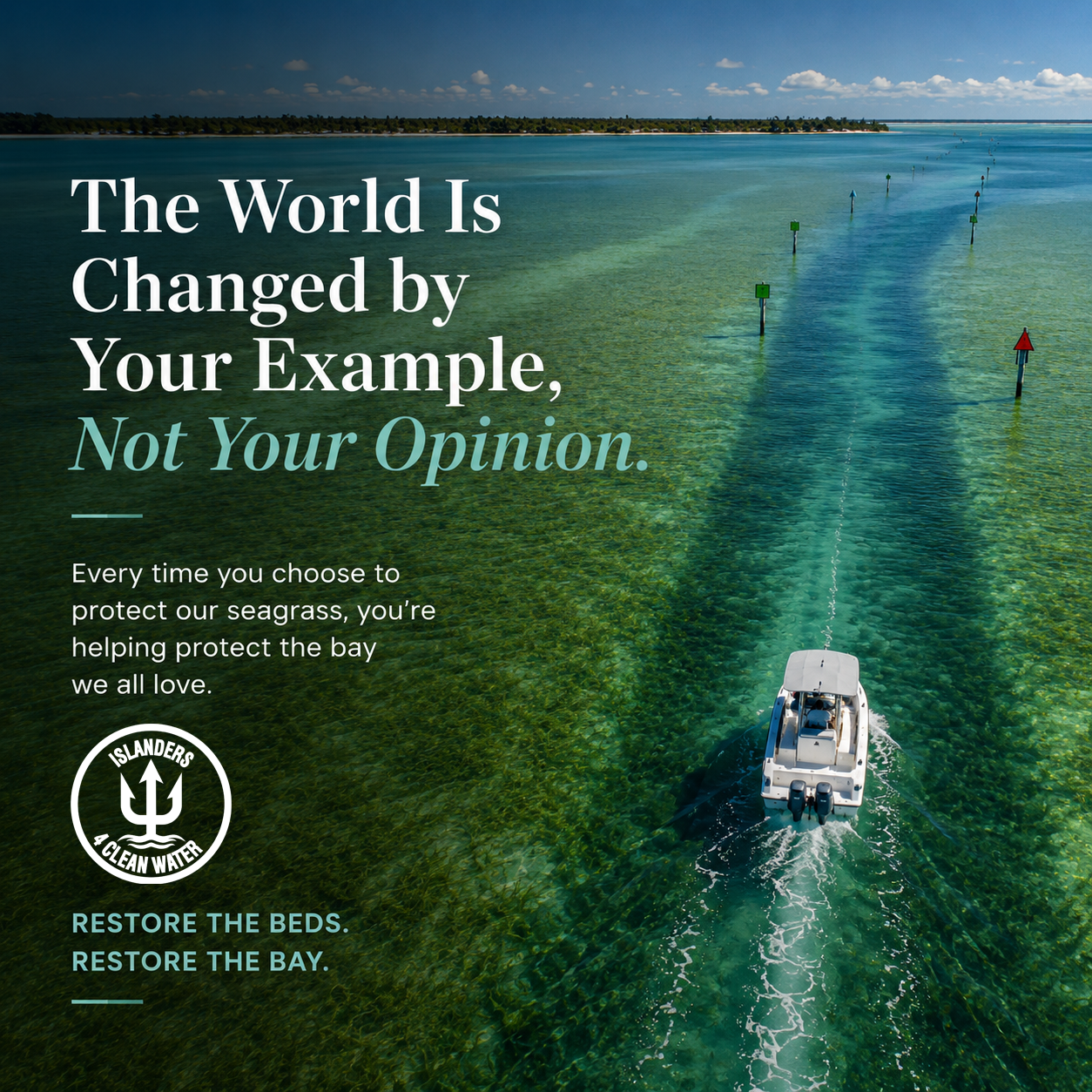
RESTORE THE BEDS. RESTORE THE BAY.
Protecting existing seagrass is one of the most important parts of restoration.
Every avoided prop scar, every responsible boating decision, and every effort to keep pollution out of the water helps protect the habitat already growing beneath the surface.
"Restoration starts with protecting what is already there."
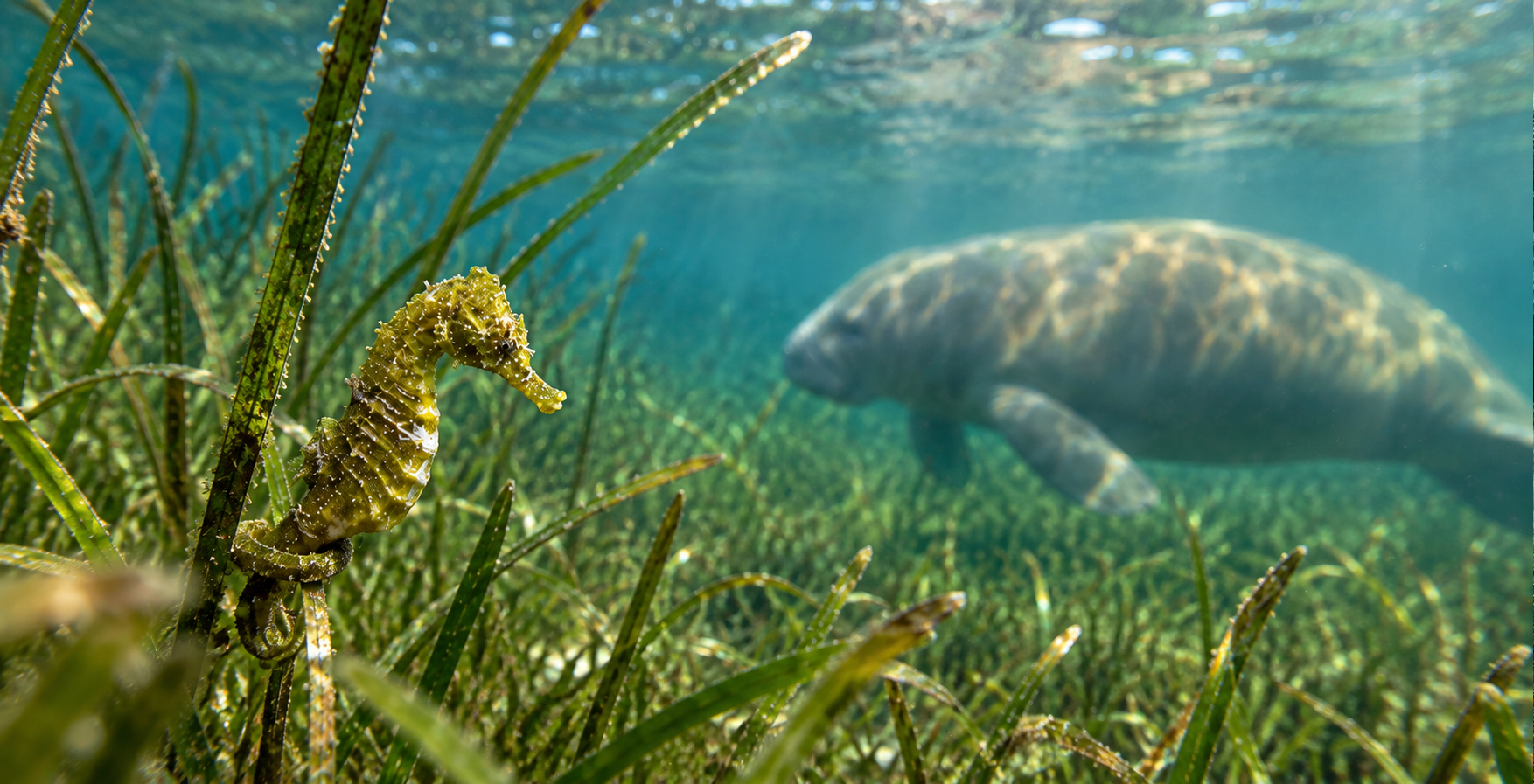
IMAGINE…
fish moving through underwater grass.
crabs hiding between the blades.
juvenile fish growing in protected habitat.
manatees feeding nearby.
clear water reaching the meadow below.
boaters following the channel.
prop scars disappearing instead of multiplying.
a bay alive beneath the surface.
IMAGINE MEADOWS BENEATH THE WATER.
Take Action
WHAT YOU CAN DO
Stay in marked channels.
Use navigation channels whenever possible to avoid shallow seagrass beds.
Watch your depth.
Slow down and pay attention when traveling through shallow water.
Trim your motor.
Raise the propeller when conditions require it to avoid contacting the bottom.
Anchor on sand.
Avoid dropping anchors into seagrass.
Protect clean water.
Reduce pollution and runoff that can affect shallow-water habitat.
"What looks like grass beneath the water is an entire neighborhood."
PROTECT WHAT'S BENEATH YOU
Protecting seagrass does not require a grand gesture.
Follow the channel. Watch your depth. Trim your motor. Anchor on sand. Keep pollution out of the water.
Those small choices help protect the underwater meadows that support fish, wildlife, clearer water, and healthier coastal ecosystems.
Protect the beds. Protect the bay.
IMAGINE MEADOWS BENEATH THE WATER.