September
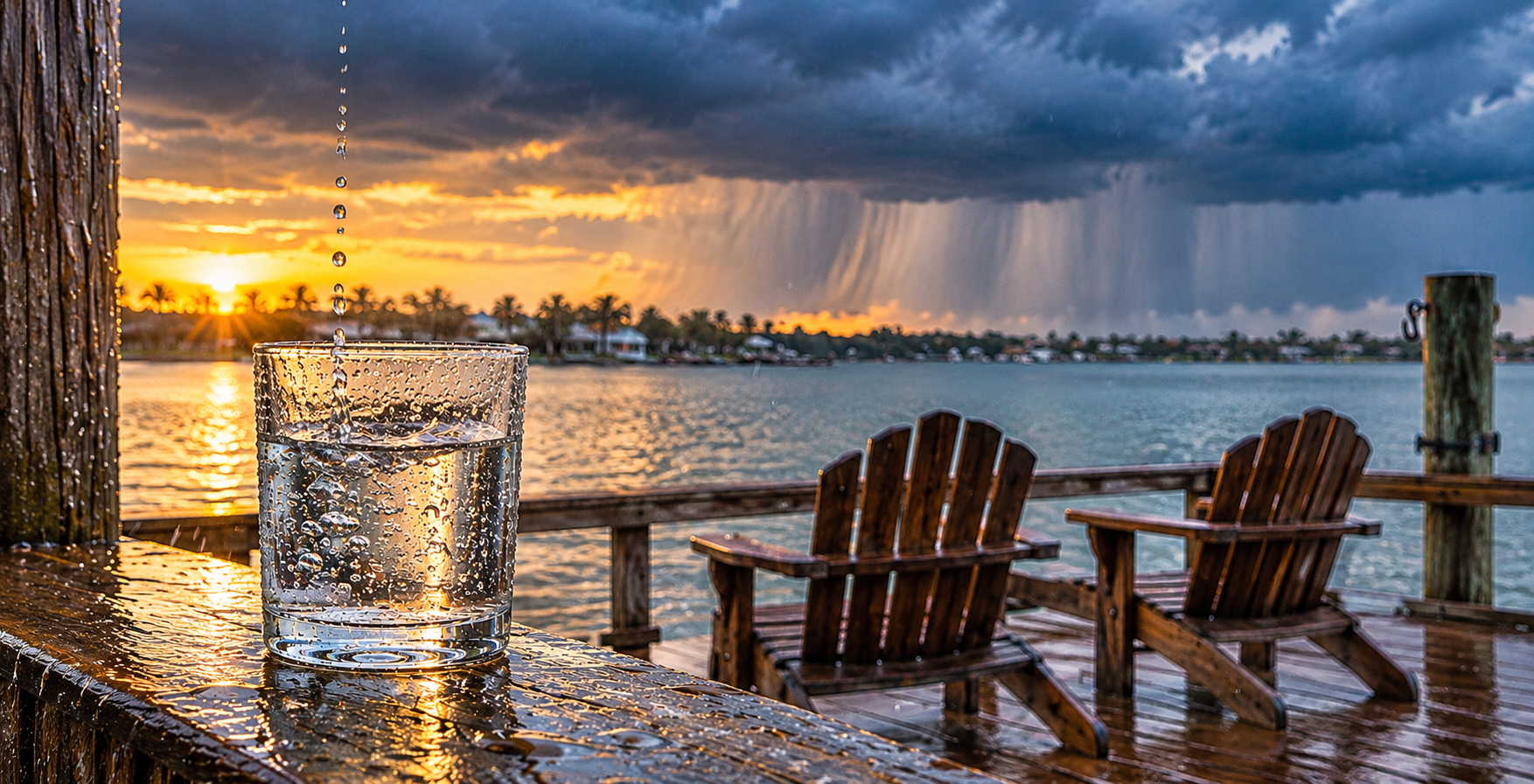
Imagine Catching the Sky
"What if every rainstorm became a resource?"
Rain is part of an endless water cycle. The water falling on our roofs today may have once been part of a river, glacier, cloud, or ocean.
Rain can either rush across roofs, streets, and driveways as runoff — or we can slow it down, capture it, and give it a chance to soak into the ground.
"All the water that will ever be is right now."
Follow the water
Where Does the Rain Go?
Every roof, driveway, yard, and street helps determine where rainwater travels.
When rain moves quickly across hard surfaces, it can carry fertilizers, oils, sediment, litter, and other pollutants toward storm drains and waterways.
"Rain falls everywhere. Where we send it matters."
Without intervention
With smart landscaping
Simple solutions
Catch It Where It Falls
One of the easiest ways to reduce runoff is to capture rainfall close to where it lands.
Redirect downspouts
Aim downspouts toward planted areas instead of driveways or sidewalks.
Use a rain barrel
Collect roof runoff at the downspout for later use in the landscape.
Plant a rain garden
A shallow planted area designed to hold stormwater and let it soak in.
Reduce hard surfaces
Replace unnecessary pavement with mulch, native plants, or permeable areas.
Create infiltration areas
Mulch, native plants, and healthy grass all give water somewhere better to go.
"Turn rainwater into a resource instead of runoff."
Build one yourself
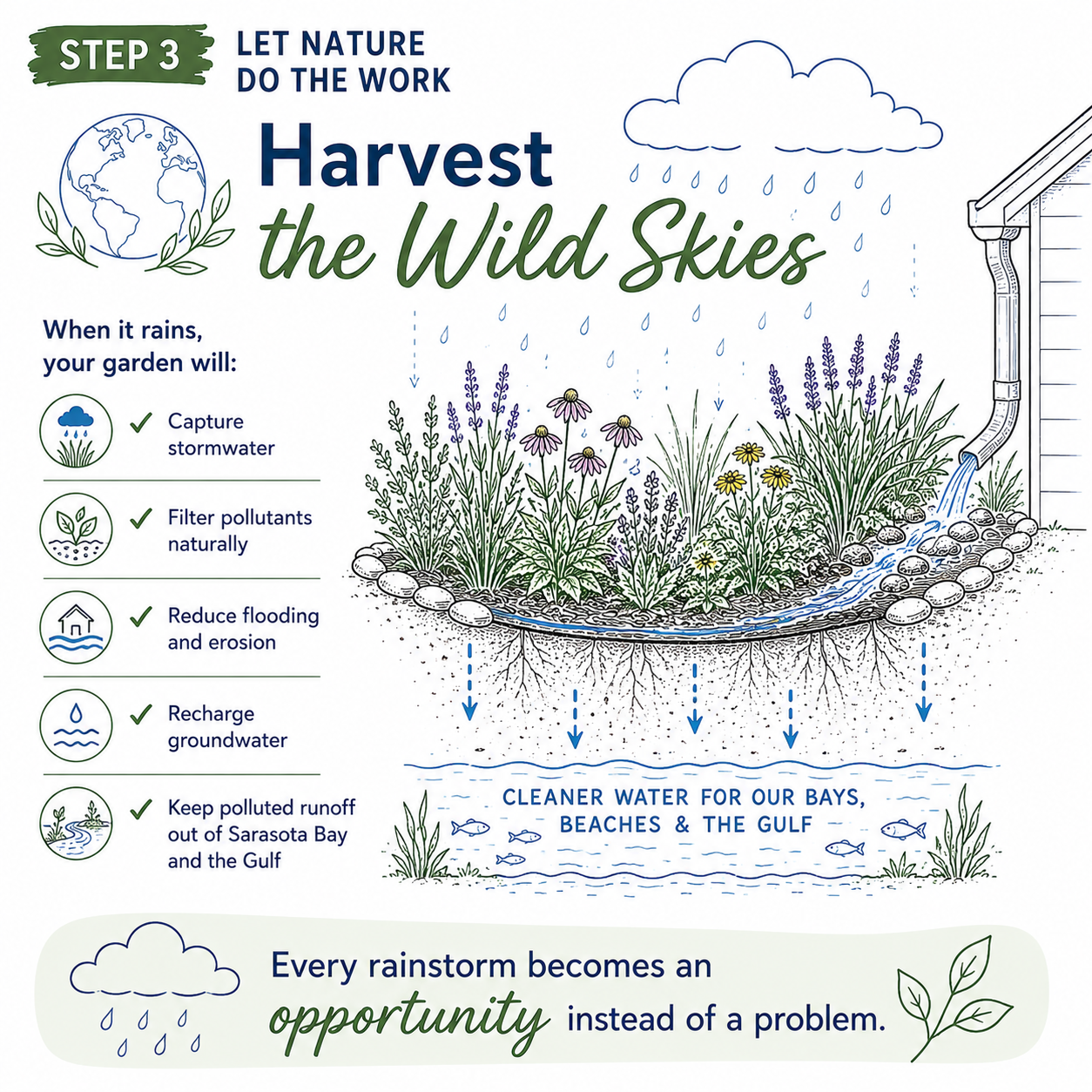
Build a Rain Garden
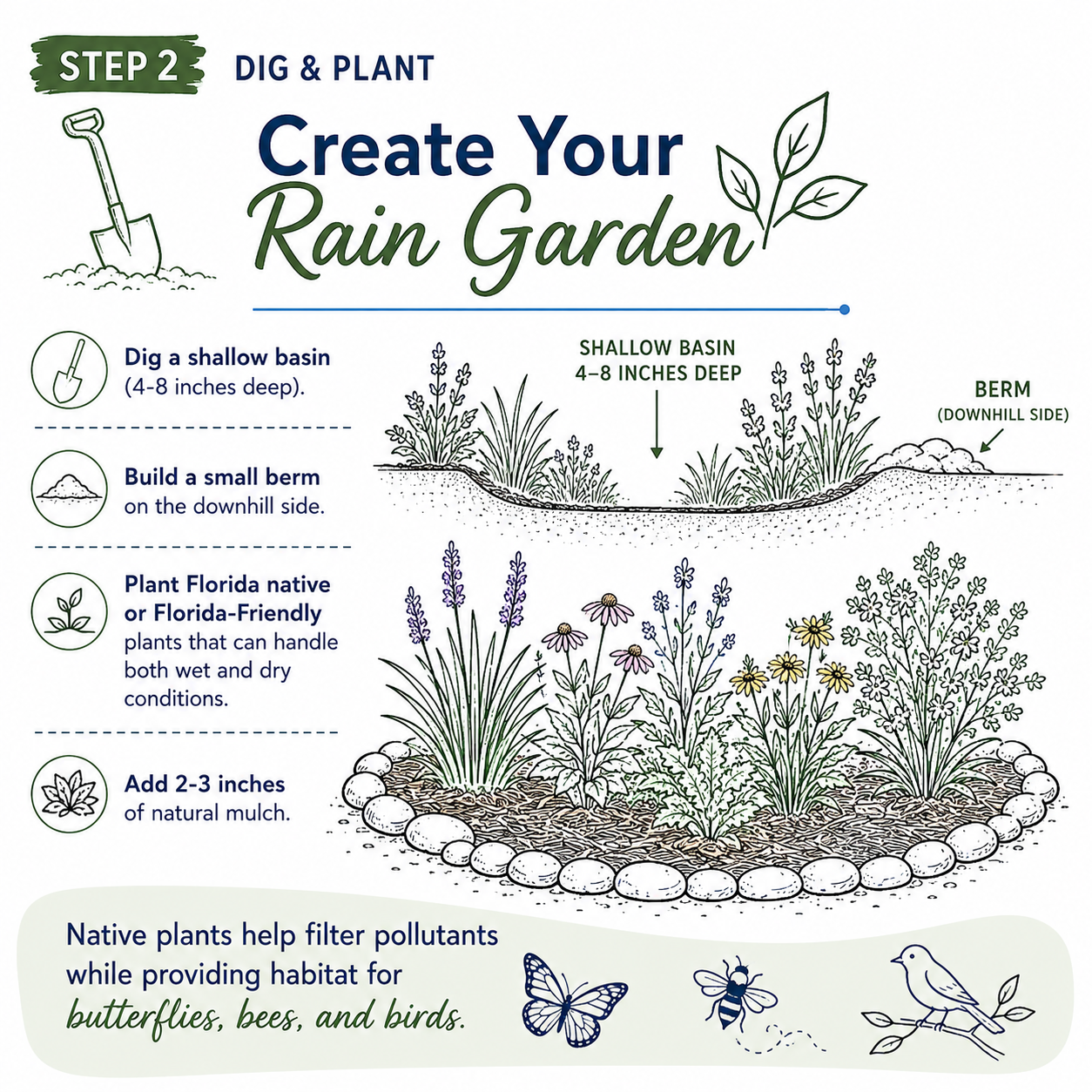
A rain garden is a shallow planted area designed to temporarily hold stormwater and allow it to soak into the ground. It doesn't need to be large to make a difference.
Choose the right location
Place the garden where water naturally collects or can be directed from a downspout.
Create a shallow basin
Shape the area so rain can collect temporarily instead of immediately running away.
Plant Florida-native plants
Choose plants that can tolerate both wet and dry conditions — Florida has plenty.
Let roots and soil do the work
Plants and soil help slow and filter stormwater naturally.
Give the rain time to soak in
The goal is temporary capture, not standing water. Most rain gardens drain within 24 hours.
"Every storm becomes an opportunity."

Let nature absorb it
Let the Landscape Hold the Water
Thoughtful landscaping can help slow, spread, and soak rainfall before it reaches the street.
The goal is not to trap all water permanently, but to slow it down and give the landscape more time to absorb it.
"Your yard isn't separate from the watershed. It's part of it."
Save some for later
Save Some for Later
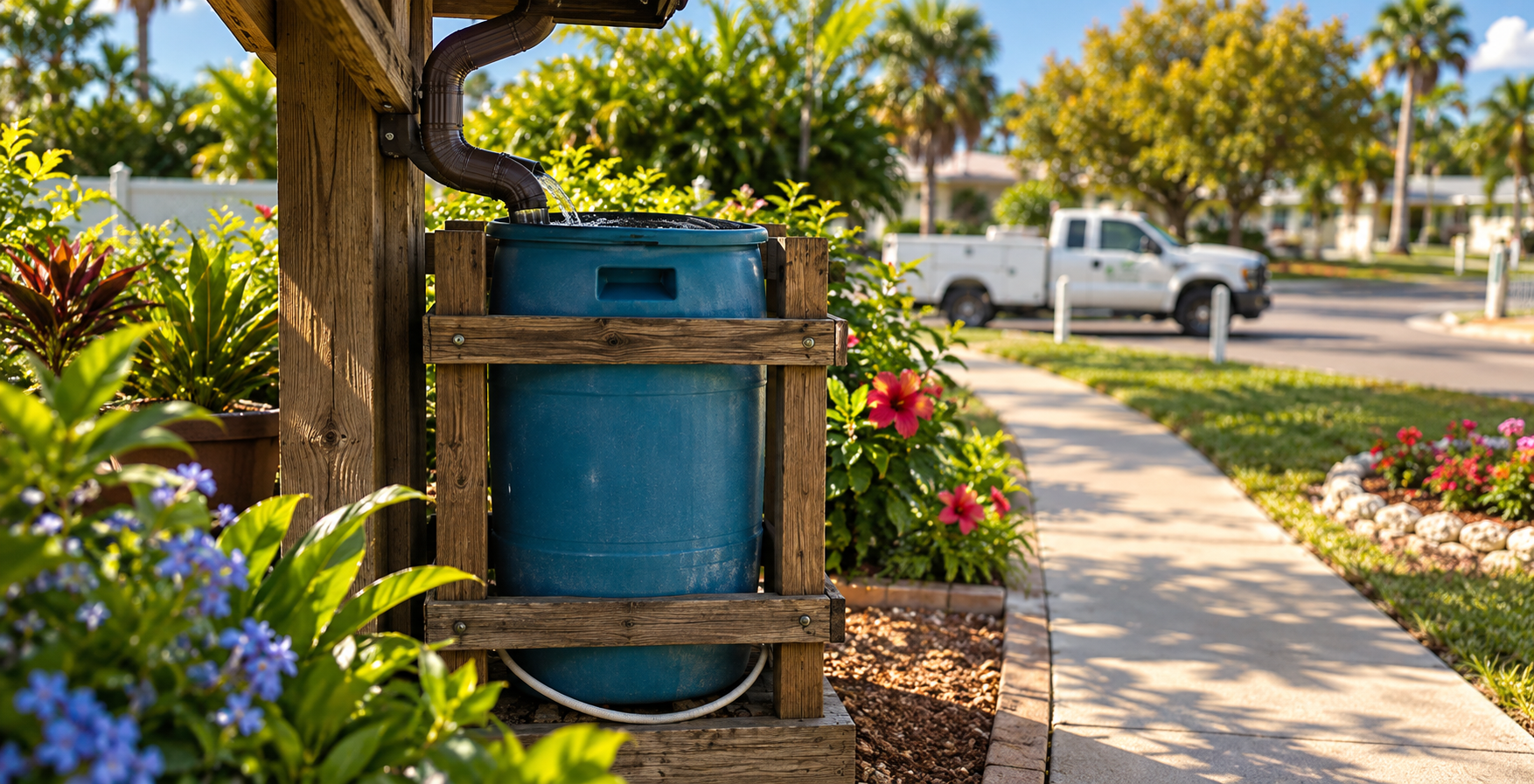
Rain barrels collect water from roofs so it can be reused later for plants and landscaping.
This reduces the amount of roof runoff immediately entering streets and storm drains — while giving you a free source of water for appropriate outdoor uses.
"Catch the rain today. Use it tomorrow."
In your community
See Rain Gardens in Action
Rain gardens can be incorporated into neighborhood parks and public landscapes as well as private yards.
Examples can be seen at Holmes Beach pocket parks including Nunn Park, Key Royale Park, 34th Street & 6th Avenue Park, and 35th Street & 6th Avenue Park.
These small projects demonstrate how planted spaces can capture and filter stormwater while also supporting native plants and wildlife.
Catch it.
Slow it.
Soak it in.
The I4CW connection
Cleaner Water Starts with Rain
Rain itself is not pollution. The problem begins when stormwater moves across surfaces and picks up pollutants along the way.
Slowing, capturing, and absorbing more rainfall can help reduce the amount of polluted runoff reaching canals, bays, and coastal waters.
"Clean water starts before the storm drain."
IMAGINE…
rain landing on a roof.
a barrel catching every drop.
a downspout feeding a garden.
native roots drinking it in.
rain gardens filling for a moment.
water soaking into the soil.
less runoff racing toward the street.
cleaner water reaching the bay.
IMAGINE CATCHING THE SKY.
Take action
What You Can Do
01
Redirect your downspout
Send rain toward an appropriate planted area instead of directly onto hard surfaces.
02
Install a rain barrel
Capture roof runoff for later use in the landscape.
03
Build a rain garden
Give stormwater a planted place to slow down and soak in.
04
Reduce hard surfaces
Where practical, replace unnecessary pavement with mulch, vegetation, or permeable areas.
05
Plant native
Use plants suited to Florida conditions that support healthy soil, wildlife, and water infiltration.
"When the well is dry, we know the value of water."
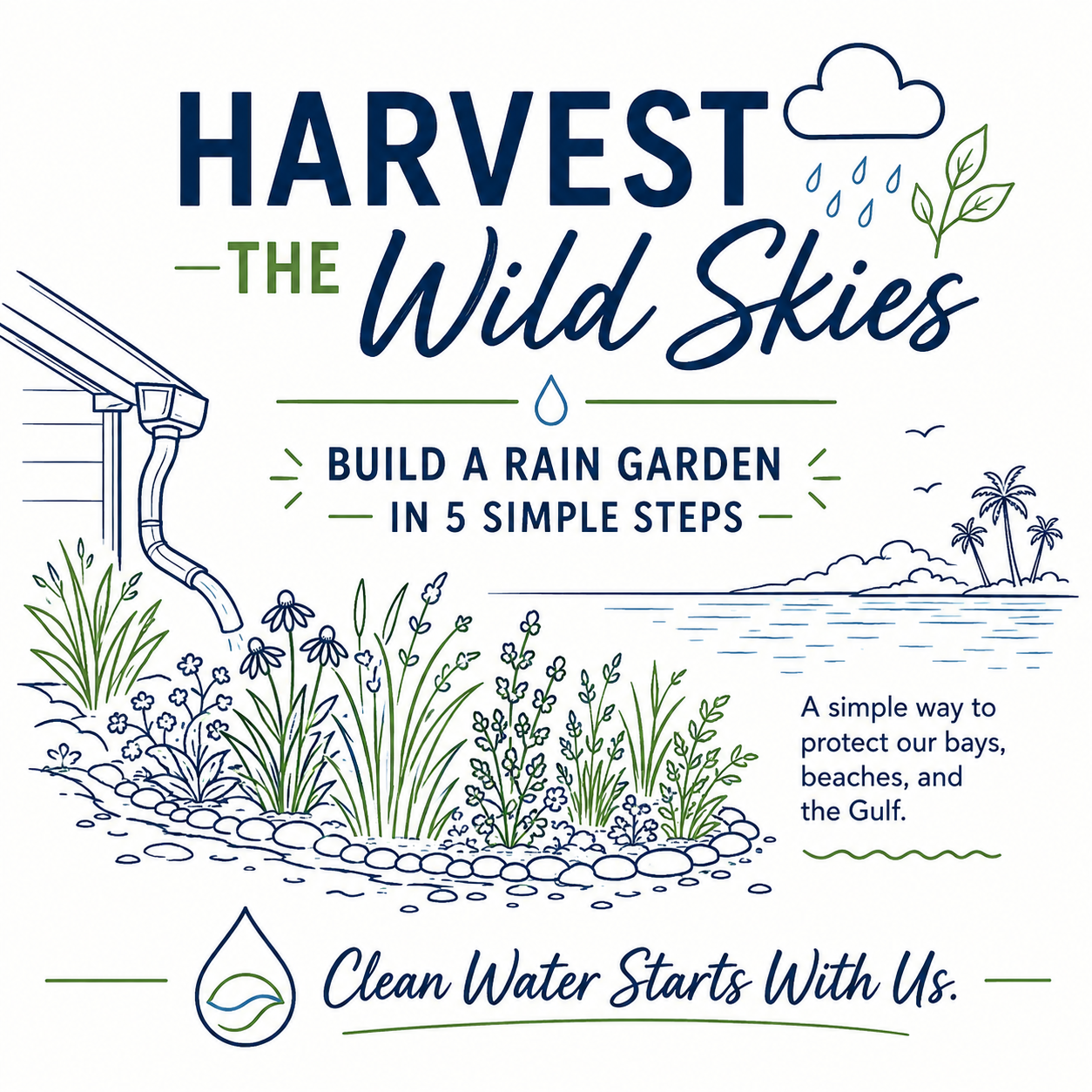
Harvest the Wild Skies
Catching rain doesn't have to be complicated. Redirect one downspout. Add a rain barrel. Build a small rain garden. Replace a little pavement with plants. Give rainfall somewhere better to go.
Catch the rain. Slow the runoff. Protect the water.
Imagine Catching the Sky.