April
IMAGINE SHORES WITHOUT PLASTIC
"What if the only things washing ashore belonged there?"
Single-use plastics are often used for only a few minutes — but they can remain in the environment for years. Bottles, bags, wrappers and other plastic items can move from streets and neighborhoods into storm drains, bays and the Gulf.
"What we use for a moment can become a much longer problem."
The Journey of Plastic
THERE IS NO AWAY
Plastic does not simply disappear after it is thrown away. It can become litter, enter waterways or slowly break into smaller pieces that spread through the environment.
Every piece of plastic that enters a storm drain has a path — and that path leads to the water.
"Plastic may leave our hands. It does not leave the environment."
Wildlife Impact
WILDLIFE DOESN'T KNOW THE DIFFERENCE
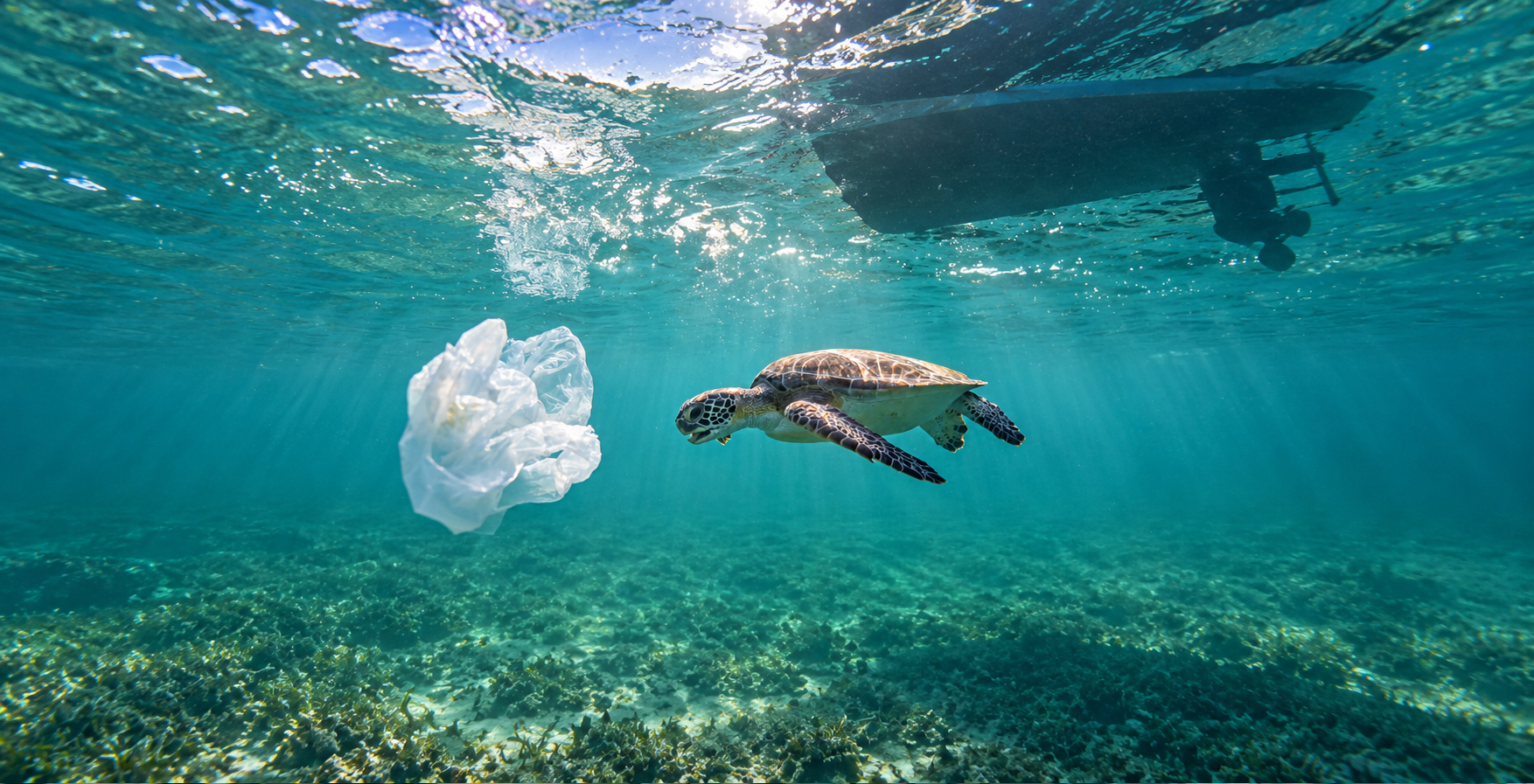
Sea turtles mistake floating plastic bags for jellyfish. Seabirds feed plastic fragments to their chicks. Fish ingest microplastics throughout the water column. Entanglement in plastic bags, rings and fishing line injures and kills marine animals every year.
Wildlife cannot distinguish between food and plastic. Keeping litter and plastic out of the water is one of the most direct ways to protect the animals that share our coast.
"Keeping plastic out of the water keeps wildlife safer."
Less plastic. Cleaner water. Healthier wildlife.
Pass on Plastic. Protect Our Waters.
Plastic doesn't disappear. It breaks down into smaller pieces that can pollute our oceans and threaten turtles, manatees, fish, and other marine life. By choosing reusable bottles and bags, recycling correctly, avoiding unnecessary plastics, and helping clean up litter, we can all reduce the amount of plastic reaching our waterways.
Small choices add up. Pass on plastic and help protect the waters and wildlife that make our island home special.
"The ocean gives us so much. Let's give back by keeping it clean."
Take Action
UNPLASTIC YOUR LIFE
Unplastic (verb): To remove or replace single-use plastics with reusable, compostable, or more sustainable alternatives.
The goal is not perfection. It is making more intentional choices — one item at a time.
Bring reusable bags.
Carry a refillable water bottle.
Skip unnecessary straws and utensils.
Choose reusable cups and containers.
Reduce excess packaging when possible.
"Start with one item. Then another."
Earth Day — April 22
MAKE EVERY DAY EARTH DAY
Earth Day is one reminder, but environmental stewardship happens through everyday choices — not just once a year.
- Reduce plastic.
- Reuse what you can.
- Recycle correctly.
- Pick up litter.
- Conserve water.
- Leave no trace.
"Small actions become meaningful when they become habits."
IMAGINE…
a beach without bottles.
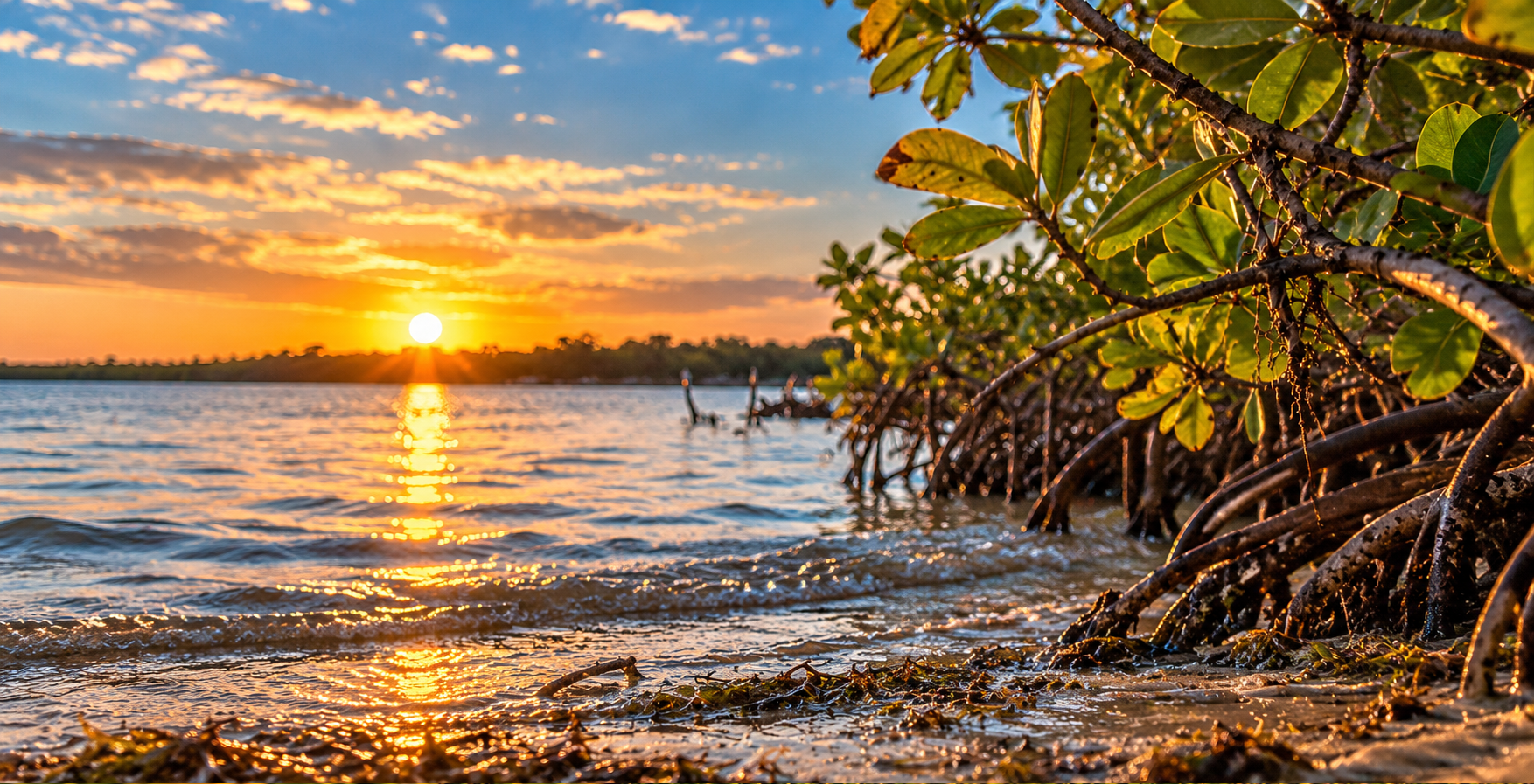
mangroves without bags.
turtles without plastic in their path.
fish swimming through clean water.
storm drains carrying only rain.
reusable becoming normal.
litter never reaching the tide.
IMAGINE SHORES WITHOUT PLASTIC.
National Arbor Day is the last friday in april
TREES AND CLEAN WATER GO TOGETHER
National Arbor Day is a reminder that trees are one of our most powerful environmental allies. Their roots hold soil in place, filter stormwater before it reaches bays and waterways, and provide shade that keeps water temperatures cooler for fish and wildlife.
On Anna Maria Island and throughout the coastal Gulf region, native trees like live oaks, gumbo limbos and sea grapes play a critical role in protecting water quality. Their canopy slows rainfall, reducing runoff that carries pollutants into storm drains and the Gulf.
- Trees filter stormwater and reduce runoff.
- Root systems stabilize soil and prevent erosion.
- Canopy shade keeps waterways cooler for wildlife.
- Native trees support pollinators and local food webs.
- Planting trees is one of the most lasting environmental acts.
"Plant a tree. Protect the water."
"Imagine if convenience didn't have to become pollution."
Take the Next Step
HARD PASS ON PLASTIC
Cleaner shores don't require eliminating every piece of plastic overnight. They begin by reducing the unnecessary ones.
Bring a reusable bottle. Carry a bag. Skip something you don't need. Pick up litter when you see it. Recycle correctly.
Use less. Reuse more. Keep plastic out of the water.
IMAGINE SHORES WITHOUT PLASTIC.