February
IMAGINE LIFE
BENEATH THE CANOPY
"Look beneath the branches and an entire world comes alive."
Florida's trees do much more than provide shade. Their branches, leaves, trunks and roots create habitat, support wildlife, stabilize land, interact with rainfall, and help define the natural character of our coastal environment. Mangroves are one of the clearest examples of how a single tree can connect land, water and wildlife.
Wildlife & Habitat
Beneath the Canopy
A healthy tree is not simply one living thing. It becomes part of a larger habitat. Trees can provide food, shelter, shade, nesting areas and places for wildlife to raise their young. Birds and pollinators use the canopy above, while insects and other wildlife occupy the branches, bark and surrounding vegetation.
Native trees are especially valuable because they are part of the ecosystems Florida wildlife evolved alongside. They support species that depend on them in ways that non-native trees simply cannot replicate.
"When we protect a tree, we protect the life that depends on it."
Mangroves & Shorelines
Where Land Meets Water
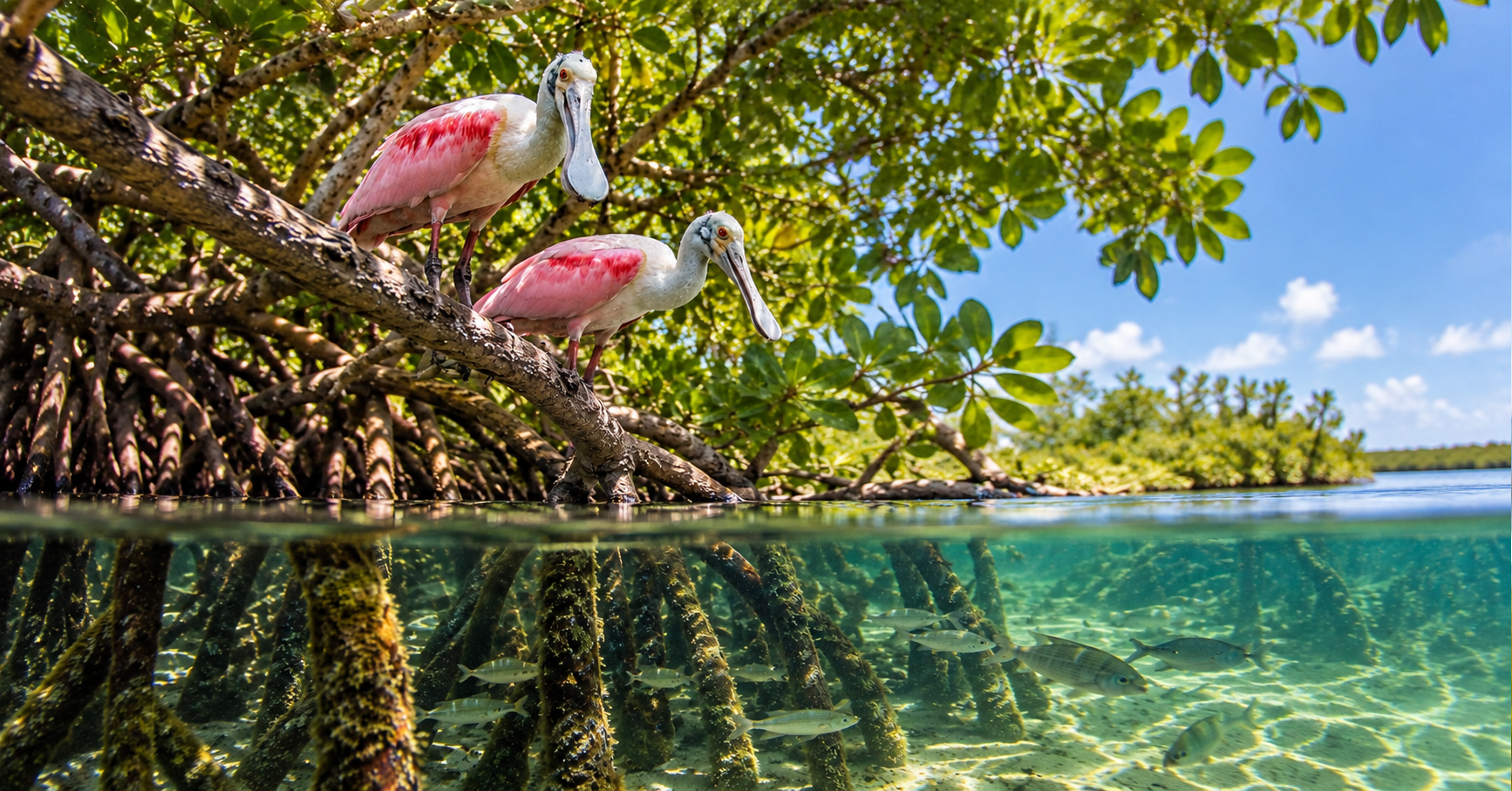
Mangroves demonstrate the connection between trees and clean water particularly well. Their complex root systems help stabilize shorelines and reduce erosion while creating sheltered habitat beneath the water. Their roots provide nursery habitat for fish, crabs, shellfish and other aquatic life.
Above the waterline, mangrove branches and canopy provide habitat for birds and other wildlife. Mangroves also help trap sediments and interact with runoff moving between land and coastal waters.
"Above the water. Below the surface. One habitat connects it all."
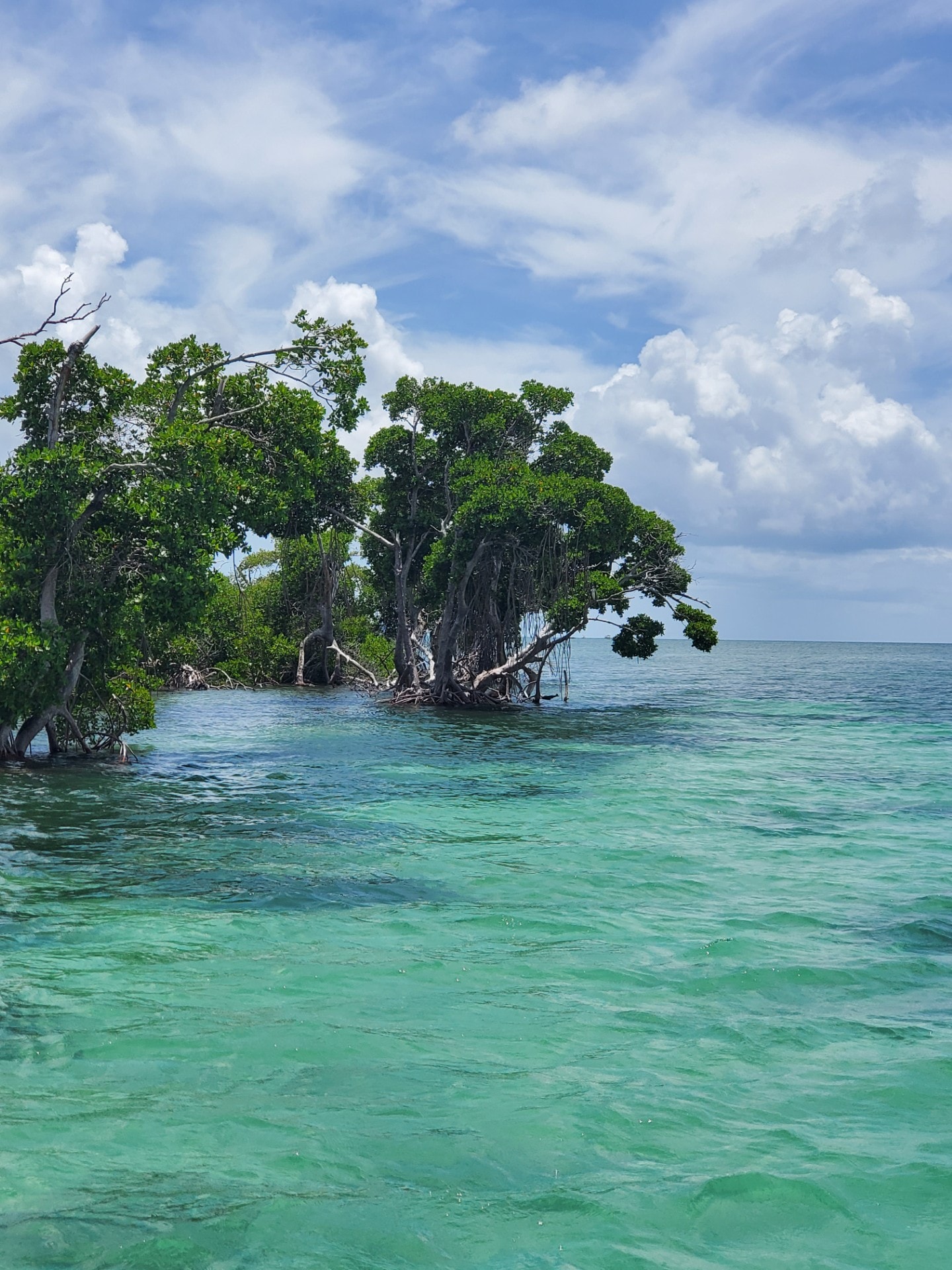
Did you know that world Wetlands Day is February 2nd?
Nature's Living Buffer
Mangroves are part of the larger story of Florida's wetlands. Wetlands can temporarily store excess water during heavy rain, help slow the movement of water, trap sediments and some pollutants, and provide important habitat for fish, birds and other wildlife.
In coastal communities, healthy wetlands and mangrove shorelines can also help reduce erosion and buffer shorelines from waves and storms. Protecting wetlands means protecting interconnected systems: land, water, wildlife and coastal communities.
"Protect the wetlands. Protect the water. Protect the life within them."
Native Tree Guide
Built for Florida
Florida native trees evolved with our heat, seasonal rainfall, sandy soils, storms and other local conditions. Choosing trees appropriate for a particular planting location can create more resilient landscapes while providing habitat.
Canopy Trees
- Live Oak
- Bald Cypress
Coastal Trees
- Gumbo Limbo
- Buttonwood
Smaller Native Trees
- Eastern Red Cedar
- Chickasaw Plum
- Fringe Tree
Native Palms
- Sabal Palm
- Saw Palmetto
- Dwarf Palmetto
Clean Water Connection
Roots That Protect
Tree roots do important work beneath the surface. Roots stabilize soil, help reduce erosion and can help rainfall infiltrate into the ground rather than immediately becoming runoff. Along the shoreline, appropriate coastal vegetation can help hold soil in place.
In our neighborhoods, tree canopy also provides shade and helps create cooler outdoor spaces. Protecting trees and soil is part of protecting the larger landscape that ultimately connects to our waterways.
"Healthy roots. Healthy habitat. Healthier water."
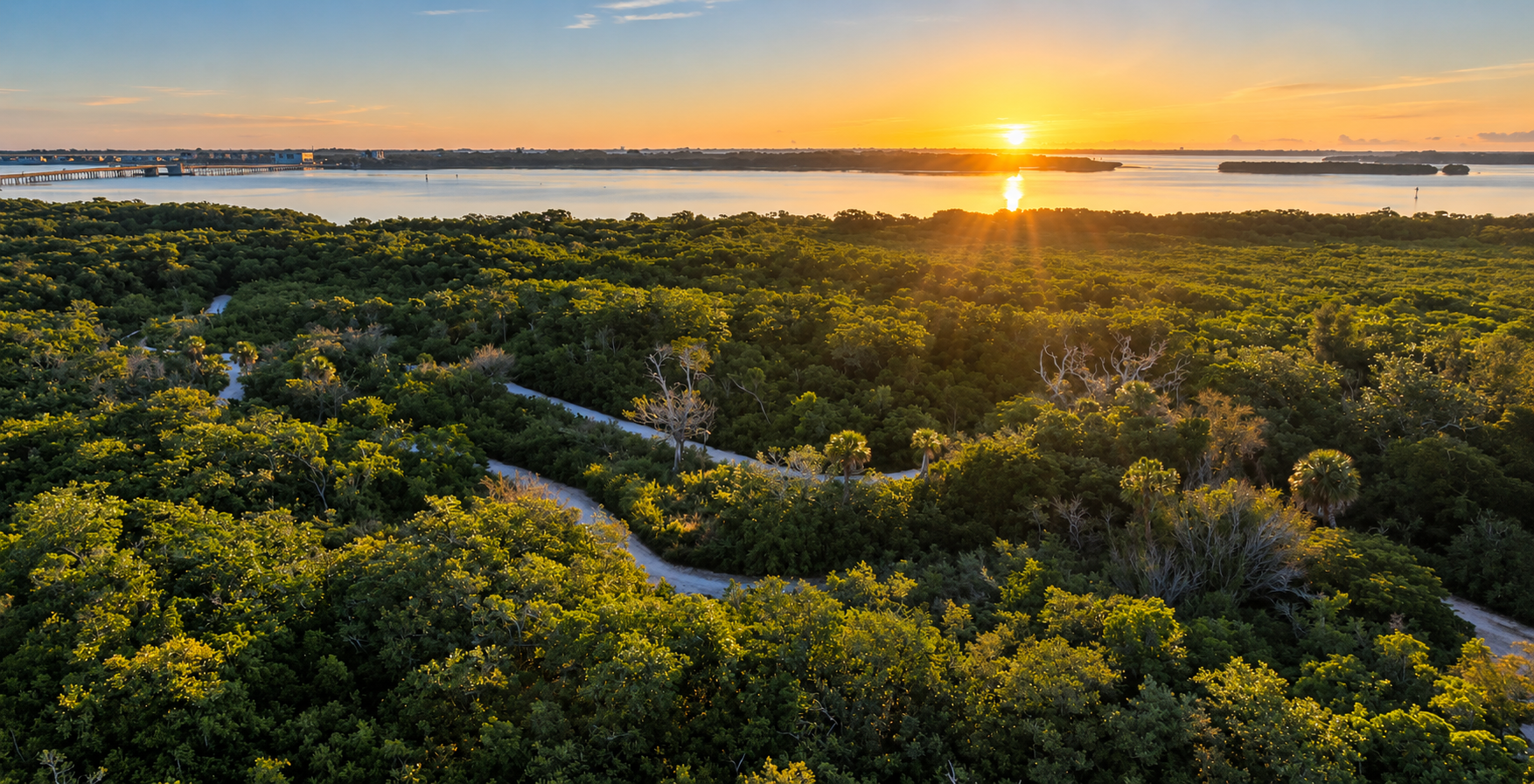
IMAGINE…
a branch becoming a nest.
a flower feeding a pollinator.
a canopy cooling the ground below.
roots holding a shoreline together.
mangroves sheltering young fish.
wetlands slowing the rain.
a tree becoming an ecosystem.
IMAGINE LIFE BENEATH THE CANOPY.
Take Action
What You Can Do
Plant a native tree.
Choose a species appropriate for your location, available space and coastal conditions.
Protect existing trees.
Protect roots and surrounding soil and give young trees the care they need to become established.
Give wildlife somewhere to live.
Plant a variety of native trees, shrubs and plants that provide food, shelter and nesting opportunities.
Respect mangroves and wetlands.
Avoid damaging these sensitive habitats and follow applicable requirements before trimming or altering mangroves.
Protect what flows downstream.
Keep litter, plastics and unnecessary landscape chemicals away from areas where rainfall can carry them toward wetlands and waterways.
"A tree is never just a tree. Look closer and an entire world lives around it."
SPEAK FOR THE TREES
Protecting Florida's trees isn't simply about preserving something beautiful. Trees and wetlands are part of living systems connecting our neighborhoods to wildlife, shorelines and water.
Planting a native tree, protecting an existing canopy, respecting mangroves, caring for wetlands and keeping pollutants out of runoff are all ways individuals can help protect those connections.
Protect the trees. Protect the habitat. Protect the water.
IMAGINE LIFE BENEATH THE CANOPY.